


en
en v
Phone
Cart0 Tickets
Total: 0€
Account
Calendar
Search
Menu
X

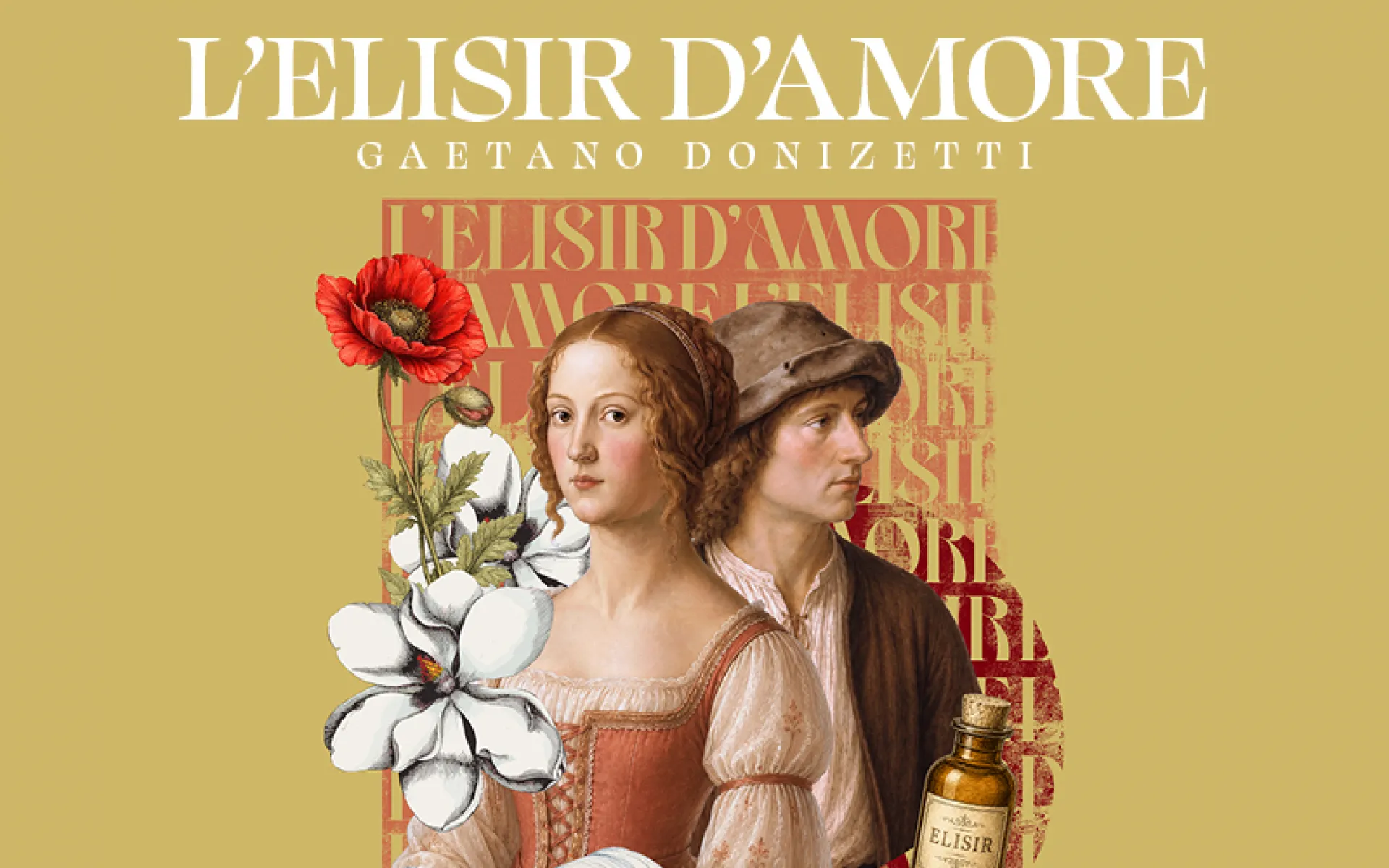
The Elixir of Love

VenueTeatro Verdi Trieste
CalendarFri 12 Feb 2027 - Sun 21 Feb 2027
Synopsis/Details

The Elixir of Love – Gaetano Donizetti

Opera sung in Italian, with Italian and English surtitles

OPERA AND BALLET SEASON 2026-27

12, 13, 14, 18, 20, 21 February 2027


Synopsis

Place: A small village in the Basque Country, Spain

Time: The end of the 18th century


Act 1

Nemorino, a poor peasant, is in love with Adina, a beautiful landowner, who torments him with her indifference. When Nemorino hears Adina reading to her workers the story of Tristan and Isolde, he is convinced that a magic potion will help him to gain Adina's love. The self-important Sergeant Belcore appears with his regiment and immediately sets about courting Adina in front of everyone. Nemorino becomes anxious (although Adina meanwhile secretly derides Belcore's complacency) and, alone with Adina, reveals his love for her. Adina rebuffs him, saying that she wants a different lover every day and that Nemorino would do well to follow her example. Nemorino declares that his feelings will never change. The traveling quack doctor, Dulcamara (the self-proclaimed Dr. Encyclopedia), arrives, selling his bottled cure-all to the townspeople. Nemorino innocently asks Dulcamara if he has any of Isolde's love potion. Despite failing to recognize the name "Isolde", Dulcamara's commercial talents nevertheless enable him to sell a bottle of the "elixir" – in reality only cheap red wine – to Nemorino, who pays for it with all the cash at his disposal.


To make a safe escape, Dulcamara tells Nemorino the potion needs 24 hours to take effect – by which time, the doctor will be long gone. Nemorino drinks the potion in haste in order to watch the effect the following day. Emboldened by the "elixir" (in fact, drunk), Nemorino feigns indifference when he encounters Adina, as he expects that the elixir will facilitate his conquest of Adina the next day. She becomes increasingly annoyed; perhaps she has feelings for Nemorino after all? Belcore returns and proposes marriage to Adina. Still riled by Nemorino and wishing to give him a lesson, Adina falsely promises to marry Belcore in six days' time. Yet, Nemorino only laughs in response: such confidence is sustained in the belief in the magic potion. However, when Belcore learns that his regiment must leave the next morning, Adina promises to marry him before his departure. This panics Nemorino, who cries out for Dr. Dulcamara to come to his aid. Adina, meanwhile, invites everyone to the wedding.


Act 2

Adina and Belcore's wedding party is in full swing. Dr. Dulcamara encourages Adina to sing a duet with him to entertain the guests. The notary arrives to make the marriage official. Adina is annoyed to see that Nemorino has not appeared, for the whole deal has been intended only to punish him. While everyone goes to witness the signing of the wedding contract, Dulcamara stays behind, helping himself to food and drink. Having seen the notary, Nemorino appears, depressed, as he believes that he has lost Adina. He sees Dulcamara and frantically begs him for a more powerful, faster-acting elixir. Although Dulcamara is proud to boast of his philanthropy, upon discovering that Nemorino now has no money he changes his tune and marches off, refusing to supply him anything. Belcore emerges, musing about why Adina has suddenly put off the wedding and signing of the contract. He spots Nemorino and asks his rival why he is depressed. When Nemorino says he needs cash, Belcore suggests joining the army, as he'll receive funds on the spot. Belcore tries to excite Nemorino with tales of military life, while Nemorino only thinks of getting the potion and thus winning Adina, if only for a day before departure. Belcore produces a contract, which Nemorino signs in return for the money. Nemorino privately vows to rush and buy more potion, while Belcore muses about how sending Nemorino off to war has so easily dispatched his rival.


After the two men have left, Giannetta gossips with the women of the village. Swearing them all to secrecy, she reveals that Nemorino's uncle has just died and left his nephew a large fortune. However, neither Nemorino nor Adina is yet aware of this. Nemorino enters, having spent his military signing bonus on – and consumed – a large amount of the fake elixir from Dr. Dulcamara. Hoping to share his fortune, the women approach Nemorino with overly friendly greetings. So out of character is this that Nemorino takes it as proof of the elixir's efficacy. Adina sees Nemorino with the women, is rattled by his newfound popularity, and asks Dr. Dulcamara for an explanation. Unaware that Adina is the object of Nemorino's affection, Dulcamara explains that Nemorino spent his last penny on the elixir and joined the army for money to get more, so desperate was he to win the love of some unnamed cruel beauty. Adina immediately recognises Nemorino's sincerity, regrets her behaviour and realises that she has loved Nemorino all along. Although Dulcamara seizes the opportunity to try to sell her some of his potion to win back Nemorino, Adina declares that she has full confidence in her own powers of attraction.


Nemorino appears alone, pensive, reflecting on a tear he saw in Adina's eye when he was ignoring her earlier. Solely based on that, he convinces himself that Adina loves him. She enters and asks why he has chosen to join the army and leave the village. When Nemorino explains that he was seeking a better life, Adina responds that he is loved and that she has purchased back his military contract from Sergeant Belcore. She offers the cancelled contract to Nemorino and reassures him that, if he stays, he will be happy. As he takes the contract, Adina turns to leave. Nemorino believes she is abandoning him and flies into a desperate fit, vowing that if he is not loved he might as well go off and die a soldier. Deeply moved by his fidelity, Adina finally declares that she will love Nemorino forever. Nemorino is ecstatic. Adina begs him to forgive her, which he does with a kiss. Belcore returns to see Nemorino and Adina in an embrace. When Adina explains that she loves Nemorino, the Sergeant takes the news in stride, noting that there are plenty of other women in the world. Adina and Nemorino learn about the inheritance from his uncle. Dulcamara returns and boasts of the success of his elixir: Nemorino is now not only loved but also rich. Dulcamara exults in the boost this will bring to the sales of his product. As Dulcamara prepares to leave, everyone queues up to buy the elixir and to hail Dulcamara as a great physician.

  • Where will the performance take place?
    • TThe opera performance will take place at Teatro Lirico Giuseppe Verdi in Trieste, Italy. The main entrance is at Piazza Giuseppe Verdi, in the city centre. The theatre is easily accessible by public transport and is within walking distance of several central areas. Please check your ticket and the event details for any additional information about the entrance and seating area.
  • When should I arrive?
    • We recommend arriving at least 20–30 minutes before the scheduled start time to allow enough time for entry and finding your seat.
  • Are the seats assigned?
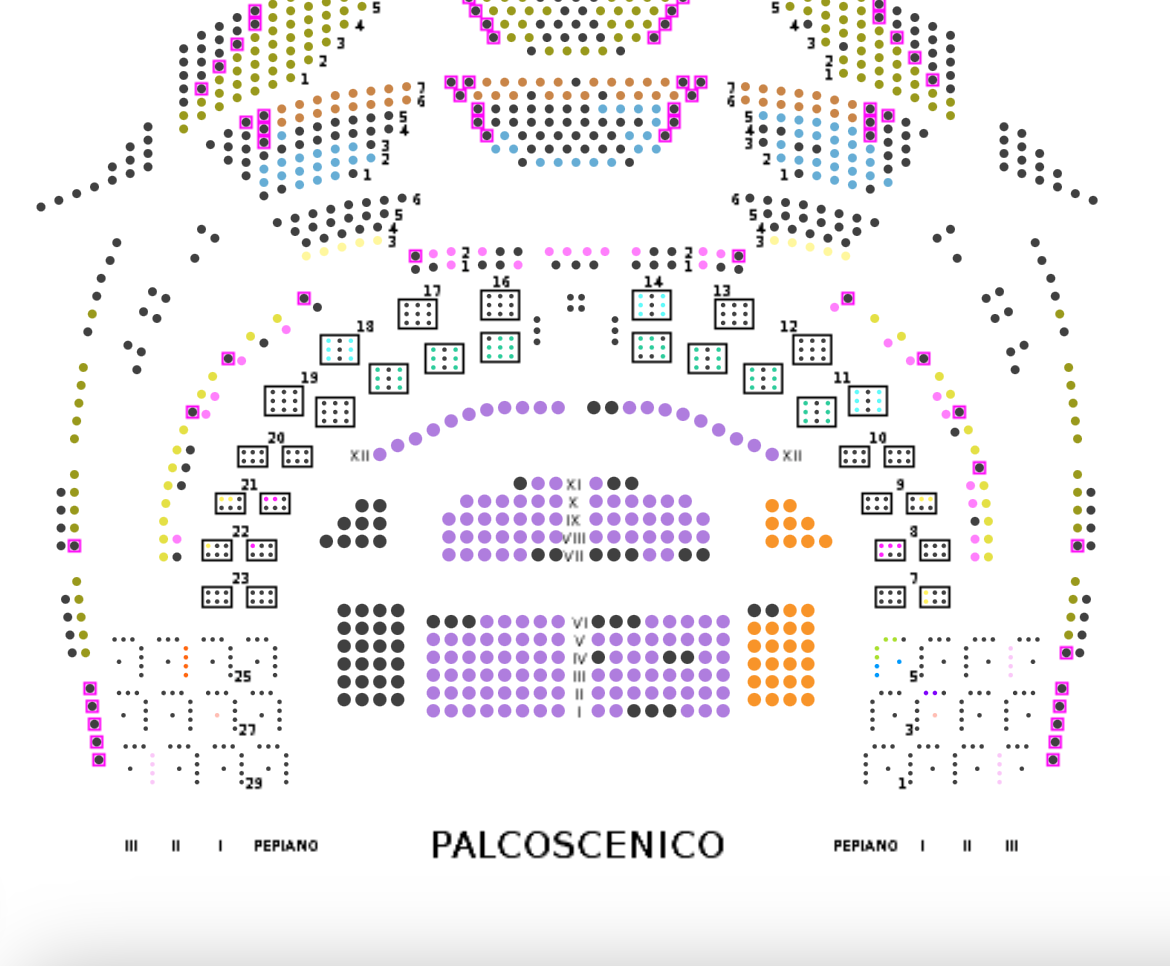
    • Yes, seating is generally assigned according to the ticket purchased. Please check your ticket for information about your seat, section and row.
  • What happens if I arrive late?
    • Late entry may be restricted to avoid disturbing the performance. If permitted, you may be asked to wait until a suitable moment before entering the auditorium.
Cast

Musical Director and Conductor: NICOLÒ JACOPO SUPPA
Director: DAMIANO MICHIELETTO
Set Design: PAOLO FANTIN
Costume Design: SILVIA AYMONINO
Lighting: ALESSANDRO CARLETTI
Production by Palau de les Arts Reina Sofía, Valencia

Adina: ELENE GVRITISHVILI
Adina: FRANCESCA BENITEZ
Nemorino: ANTONINO SIRAGUSA
Nemorino: VALERIO BORGIONI
Dr Dulcamara: AMBROGIO MAESTRI
Dr Dulcamara: ANDREA BORGHINI
Belcore: SIMONE ALBERGHINI
Belcore: JURE POČKAJ
Giannetta: TATIANA PREVIATI
Choir Master: PAOLO LONGO
Orchestra, Choir and Technicians of the Fondazione Teatro Lirico Giuseppe Verdi di Trieste

Venue
Teatro Verdi Trieste

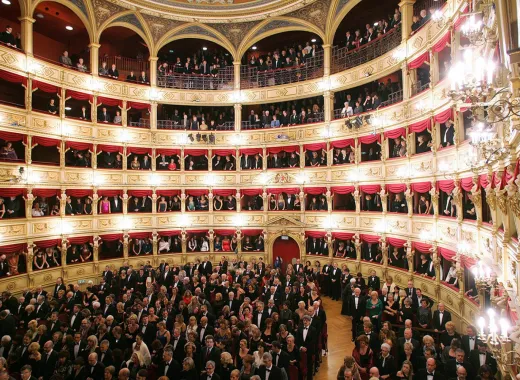
The Teatro Lirico Giuseppe Verdi is an opera house located in Trieste, Italy and named after the composer Giuseppe Verdi. Privately constructed, it was inaugurated as the Teatro Nuovo to replace the smaller 800-seat "Cesareo Regio Teatro di San Pietro" on 21 April 1801 with a performance of Johann Simon Mayr's Ginevra di Scozia. Initially, the Nuovo had 1,400 seats. In 1821, it became known as the Teatro Grande.


By the end of the 18th century, the need for a new theatre in Trieste became evident. Its main theatre, the Teatro di San Pietro, had become increasingly inadequate and finally closed its doors in 1800. A proposal to the Austrian Chancery from Giovanni Matteo Tommasini to build a private theatre had existed since 1795 and, in June 1798, a contract was drawn up whereby annual funding would come from the municipality and Tommasini would hold the rights to several boxes and the rights to sell others. Gian Antonio Selva, the architect of the La Fenice in Venice, was engaged, and he designed a classic horseshoe-shaped auditorium. However, his exterior designs were considered to be too plain for the Austrians who then engaged another architect, Matteo Pertsch, to solve the problem, which was accomplished by incorporating elements of Milan's La Scala opera house. The "Nuovo" became a mixture of La Fenice on the inside and La Scala on the exterior.


History

Several name changes have occurred during the theatre's lifetime, the first in 1821 when it became the Teatro Grande [1] and it was under this name that the theatre was the site of two Verdi opera premieres: Il corsaro in 1848 (featuring the soprano Giuseppina Strepponi, who Verdi married in 1859, in the leading role) and Stiffelio, a production which Verdi supervised - not without controversy - in 1850.[2] However, before these premieres, Verdi's operas had begun to dominate the Teatro Grande's stage, followed, as the century progressed, by all the major works of the opera repertoire, including those by Puccini and Wagner.


A further name change followed in 1861 due to a change from private to public ownership. Thus it became the Teatro Comunale and existed as such throughout the latter years of the 19th century. By 1881, seating capacity had been increased to 2,000 through the use of existing standing room spaces; but, by that December, the theatre was declared to be unsafe and it was closed for renovations, during which electricity replaced gas lighting for the reopening in 1889 with 1,000 seats.


Within hours of his death in January 1901,[3] the theatre was once again renamed, this time to honour the memory of Giuseppe Verdi. It was extensively restored between 1992 and 1997 and re-opened with about 1,300 seats[4] and with a Viva Verdi concert[3] which included excerpts from many of the composer's operas. (Like the restoration of La Scala between 2001 and 2004, a temporary alternative venue was quickly created in Trieste and the Sala Tripcovich continues to offer space for chamber opera and operettas.)


A major feature of the Teatro Verdi's programming in the past 40 years, which stems from the original Austrian occupation of the city in the 19th century and the fact that Trieste did not become part of Italy until 1918, is the "International Festival of Operetta" which takes place every summer.


Premieres

The theatre has seen the world premieres of the following operas:

Ginevra di Scozia by Simon Mayr, 21 April 1801
Annibale in Capua by Antonio Salieri 20 May 1801 
Ricciarda di Edimburgo by Cesare Pugni, 29 September 1832.
Enrico II by Otto Nicolai, 26 November 1839 
Il corsaro by Giuseppe Verdi, 25 October 1848
Stiffelio by Giuseppe Verdi, 16 November 1850
Nozze istriane by Antonio Smareglia, 28 March 1895

Accomodation

Buy now

Gift vouchers

Gift someone an unforgettable night at the opera.
Choose a gift coupon and let them pick the performance they love—music, drama, and world-class artistry, all in one elegant experience.
Official Tickets for Europe's Most Famous Opera Houses, Classical Concerts etc.
Instagram
Payment
Google Play
App Store
© 2026 RM Europa Ticket GmbH
Whatsapp