


en
en v
Phone
Cart0 Tickets
Total: 0€
Account
Calendar
Search
Menu
X

The Damnation Of Faust

VenueTeatro San Carlo Naples Italy
CalendarWed 22 Sep 2027 - Tue 28 Sep 2027
Synopsis/Details

Synopsis

Part I

The aging scholar Faust contemplates the renewal of nature. Hearing peasants sing and dance, he realizes that their simple happiness is something he will never experience. An army marches past in the distance (Hungarian March). Faust doesn't understand why the soldiers are so enthusiastic about glory and fame.

Part II

Depressed, Faust has returned to his study. Even the search for wisdom can no longer inspire him. Tired of life, he is about to commit suicide when the sound of church bells and an Easter hymn remind him of his youth, when he still had faith in religion. Suddenly Méphistophélès appears, ironically commenting on Faust's apparent conversion. He offers to take him on a journey, promising him the restoration of his youth, knowledge, and the fulfillment of all his wishes. Faust accepts.

Méphistophélès and Faust arrive at Auerbach's tavern in Leipzig, where Brander, a student, sings a song about a rat whose high life in a kitchen is ended by a dose of poison. The other guests offer an ironic "Amen", and Méphistophélès continues with another song about a flea that brings his relatives to infest a whole royal court (Song of the Flea). Disgusted by the vulgarity of it all, Faust demands to be taken somewhere else.

On a meadow by the Elbe, Méphistophélès shows Faust a dream vision of a beautiful woman named Marguerite, causing Faust to fall in love with her. He calls out her name, and Méphistophélès promises to lead Faust to her. Together with a group of students and soldiers, they enter the town where she lives.

Part III

Faust and Méphistophélès hide in Marguerite's room. Faust feels that he will find in her, his ideal of a pure and innocent woman ("Merci, doux crépuscule!"). Marguerite enters and sings Goethe's folk-style ballad about the King of Thule, who always remained sadly faithful to his lost love ("Autrefois, un roi de Thulé"). Méphistophélès summons spirits to enchant and deceive the girl and sings a sarcastic serenade outside her window, predicting her loss of innocence. When the spirits have vanished, Faust steps forward. Marguerite admits that she has dreamed of him, just as he has dreamed of her, and they declare their love for each other. Just then, Méphistophélès bursts in, warning them that the girl's reputation must be saved: the neighbors have learned that there is a man in Marguerite's room and have called her mother to the scene. After a hasty goodbye, Faust and Méphistophélès escape.

Part IV

Faust has seduced, then abandoned Marguerite, who still awaits his return ("D'amour l'ardente flamme"). She can hear soldiers and students in the distance, which reminds her of the night Faust first came to her house. But this time he is not among them.

Faust calls upon nature to cure him of his world-weariness ("Nature immense, impénétrable et fière"). Méphistophélès appears and tells him that Marguerite is in prison. While awaiting Faust's return, she has given her mother the sleeping potion Faust had previously provided to calm her mother during their nights of love, and used it so often that she has killed the old woman, and now is to be hanged the next day. Faust panics, but Méphistophélès claims he can save her—if Faust relinquishes his soul to him. Unable to think of anything but saving Marguerite, Faust agrees. The two ride off on a pair of black horses.

Thinking they are on their way to Marguerite, Faust becomes terrified when he sees demonic apparitions. The landscape becomes more and more horrible and grotesque, and Faust finally realizes that Méphistophélès has taken him directly into hell. Demons and damned spirits greet Méphistophélès in a mysterious infernal language and welcome Faust among them.

Hell has fallen silent after Faust's arrival—the torment he suffers is unspeakable. Marguerite is saved and welcomed into heaven.

  • Where is Teatro San Carlo located?
    • Teatro San Carlo is located at Via San Carlo, 98, 80132 Naples, Italy, in the heart of Naples, next to Piazza del Plebiscito and close to the Royal Palace and Galleria Umberto I.
  • How early should I arrive before the Concert?
    • We recommend arriving at least 30 minutes before the scheduled start time. This allows enough time to reach the entrance, have your ticket checked and find your seat.
  • What should I wear?
    • There is no need to wear formal evening attire. Smart casual or elegant clothing is recommended. Comfortable but presentable attire is appropriate for the theatre environment.
  • Can I enter the auditorium if I arrive late?
    • Late entry to the auditorium may not be permitted once the performance has started. Latecomers may be admitted during the first available interval, depending on the theatre's rules and the nature of the performance.
  • Can I bring a large bag or backpack?
    • Large bags and backpacks should not be taken into the auditorium. If available, they should be left in the theatre's designated cloakroom or storage area.
  • Can I bring food or drinks into the auditorium?
    • No. Food and beverages are not permitted inside the auditorium during the performance or interval.
Cast

Opera in French with supertitles in Italian and English
Duration: about 2 hours and 5 minutes, without interval

Dramatic legend in four parts
Music by Hector Berlioz
Booklet by Hector Berlioz and Almire Gandonnière


Director | Nikolaj Szeps-Znaider
Directed by Damiano Michieletto by Eleonora Gravagnola
Scene | Paolo Fantin
Costumes | Carla Teti
Lights | Alessandro Carletti
Mimic Movements | Chiara Vecchi
Video | rocafilm


Interpreters
Méphistophélès | Alex Esposito / Nicolas Courjal*
Faust | René Barbera / Atalla Ayan*
Marguerite | Annalisa Stroppa / Teresa Iervolino*
Brander | Vartan Gabrielian


Orchestra and Choir of White Voices of the San Carlo Theater
Choir Master | Fabrizio Cassi
Master of the White Voices Choir | Stefania Rinaldi


Production of the Rome Opera House

Venue
Teatro San Carlo Naples Italy


Teatro di San Carlo Napoli; San Carlo Opera House; Real Teatro di San Carlo Naples.


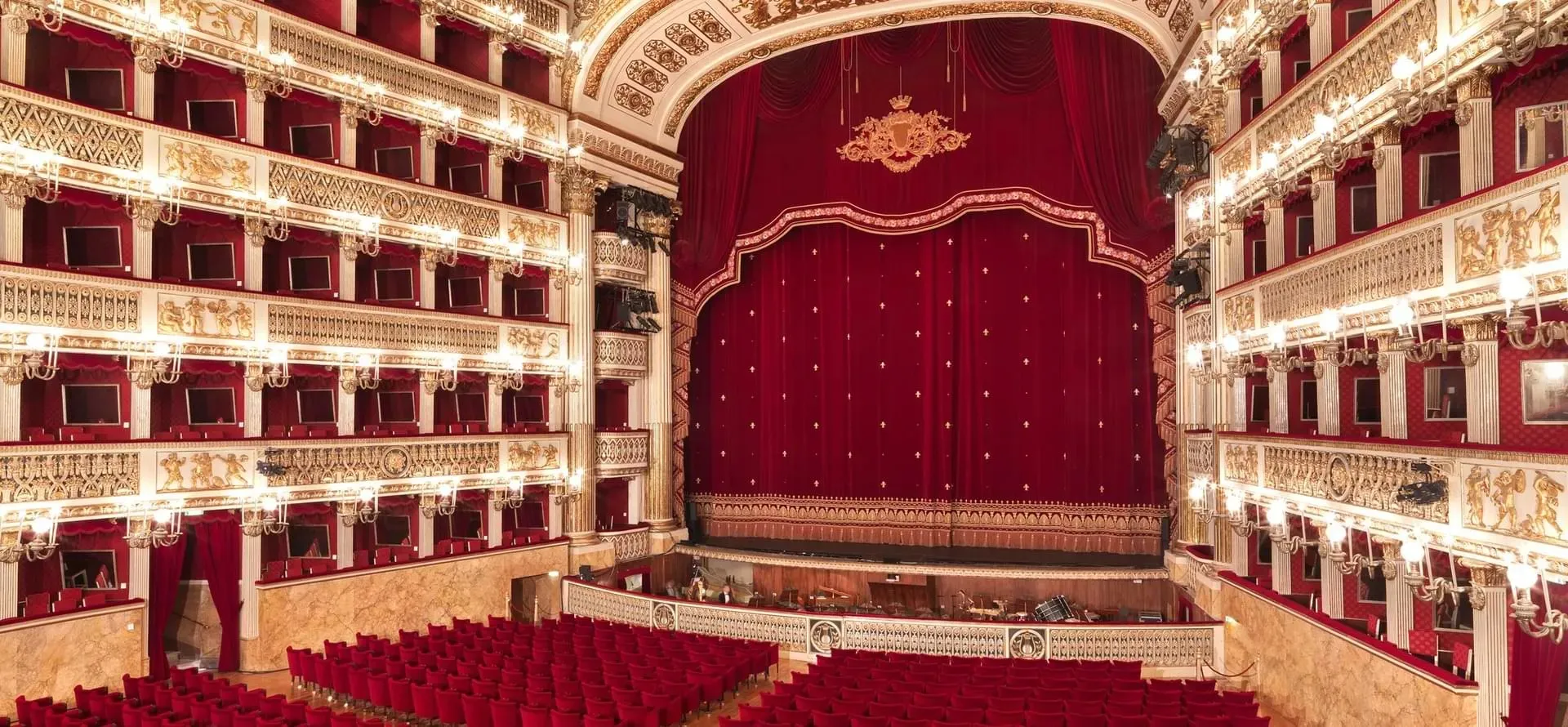
The Real Teatro di San Carlo (Royal Theatre of Saint Charles), its original name under the Bourbon monarchy but known today as simply the Teatro di San Carlo, is anopera house in Naples, Italy. It is located adjacent to the central Piazza del Plebiscito, and connected to the Royal Palace.


It is one of the oldest continuously active venue for public opera in the world, opening in 1737, only five years after the Manoel Theatre in Malta and decades before both the Milan's La Scala and Venice's La Fenice theatres. 


The opera season runs from late January to May, with the ballet season taking place from April to early June. The house once had a seating capacity of 3,285.but nowadays has been reduced to 1414 seats.[3] Given its size, structure and antiquity was the model for the following theatres in Europe.


History of the opera house


Commissioned by the Bourbon King Charles VII of Naples (Carlo VII in Italian), Charles wanted to endow Naples with a new and larger theatre to replace the old, dilapidated, and too-small Teatro San Bartolomeo of 1621, which had served the city well, especially after Scarlatti had moved there in 1682 and had begun to create an important opera centre which existed well into the 1700s.


Thus, the San Carlo was inaugurated on 4 November 1737, the king's name day, with the performance of the opera Domenico Sarro's Achille in Sciro, which was based on the 1736 libretto by Metastasio which had been set to music that year by Antonio Caldara. As was customary, the role of Achilles was played by a woman, Vittoria Tesi, called "Moretta"; the opera also featured soprano Anna Peruzzi, called "the Parrucchierina" and tenor Angelo Amorevoli. Sarro also conducted the orchestra in two ballets as intermezzi, created by Gaetano Grossatesta, with scenes designed by Pietro Righini. The first seasons highlighted the royal preference for dance numbers, and featured among the performers famous castrati.


In the late 18th century, Christoph Willibald Gluck was called to Naples by the impresario Tufarelli to direct his 1852 Clemenza di Tito at the theatre, and Johann Christian Bach in 1761-62 brought two operas, Catone in Utica and Alessandro nell'Indie.


1737: Construction of the Teatro di San Carlo


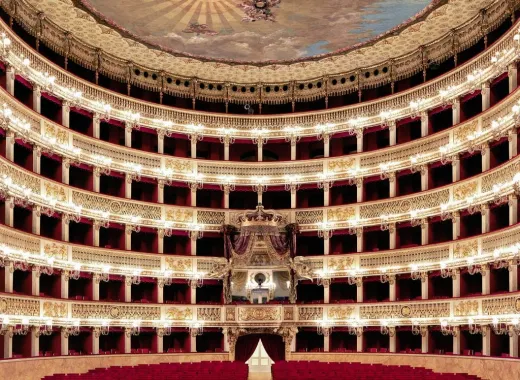
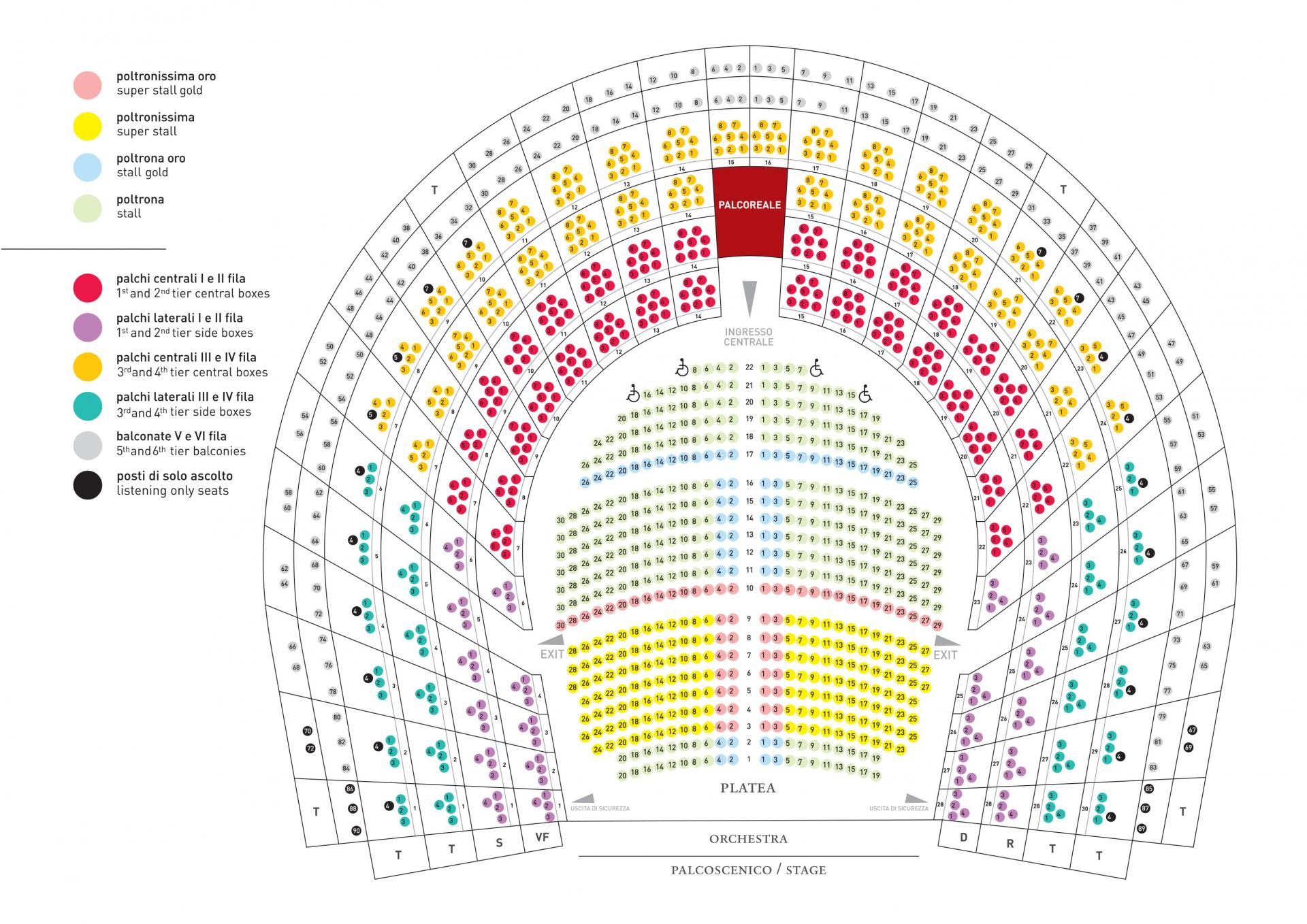
The new opera house was designed by Giovanni Antonio Medrano, a military architect, and Angelo Carasale, the former director of the San Bartolomeo. The horseshoe-shaped auditorium is the oldest in the world. It was built at a cost of 75,000 ducats. The hall was 28.6 meters long and 22.5 meters wide, with 184 boxes, including those of proscenium, arranged in six orders, plus a royal box capable of accommodating ten people, for a total of 1,379 seats. Including standing room, the theatre could hold over 3,000 people. The fastidious composer and violinist Louis Spohr reviewed the size and acoustic properties of this opera house very thoroughly on 15 February 1817 and concluded that:


there is no better place for ballet and pantomime. Military movements of infantry and cavalry, battles, and storms at sea can be represented here without falling into the ludicrous. But for opera, itself, the house is too large. Although the singers, Signora Isabella Colbran, [Prima Donna of the Teatro San Carlo opera company and Rossini's future wife], and the Signori Nozzari, Benedetti, etc., have very strong voices, only their highest and most stentorian tones could be heard. Any kind of tender utterance was lost.


Much admired for its architecture, its gold decorations, and the sumptuous blue upholstery (blue and gold being the official colours of the Bourbons), the San Carlo was now the biggest opera house in the world.[6] In relation to the power of the existing Bourbon Kingdom of the Two Sicilies, Beauvert notes that the design of the house, with its 184 boxes lacking any curtains was so that "no one could avoid the scrutiny by the sovereign" who had his private access from the Royal Palace.


In 1809 Domenico Barbaia was appointed manager of the royal opera houses in Naples and remained in charge until 1841. He soon established a reputation for innovative and dazzling productions, which attracted both the public and leading singers to the opera house.


 

Accomodation

Buy now

Gift vouchers

Gift someone an unforgettable night at the opera.
Choose a gift coupon and let them pick the performance they love—music, drama, and world-class artistry, all in one elegant experience.
Official Tickets for Europe's Most Famous Opera Houses, Classical Concerts etc.
Instagram
Payment
Google Play
App Store
© 2026 RM Europa Ticket GmbH
Whatsapp