The opera opening the 89th Maggio Musicale Festival is Benjamin Britten’s A Midsummer Night’s Dream, which premieres on 18 April at 5 p.m., with further performances on 24 April at 3.30 p.m. and 28 April at 8 p.m. Conducting is Ivor Bolton, with staging by Deborah Warner. This new production is a co-production with the Teatro Real in Madrid and the Royal Opera House, Covent Garden, London. The cast is made up of singer-actors, many of whom took part in the production’s premiere in Madrid and have previously collaborated with both the conductor and the director. For the first time at the Maggio, Britten’s masterpiece will be presented in its original English version.
New staging in coproduction with Teatro Real in Madrid and Royal Opera House (Covent Garden) in London
Plot
A Midsummer Night's Dream consists of several interconnecting plots, connected by a celebration of the wedding of Duke Theseus of Athens and the Amazon queen Hippolyta. Most of the action occurs in the woodland realm of Fairyland, under the light of the moon.
Act 1
Act 1 Scene 1
The play opens with Theseus and Hippolyta who are four days away from their wedding. Theseus is unhappy about how long he has to wait while Hippolyta thinks it will pass by like a dream. Theseus is confronted by Egeus and his daughter Hermia, who is in love with Lysander, and resistant to her father's demand that she marry Demetrius, whom he has arranged for her to marry. Enraged, Egeus invokes an ancient Athenian law before Duke Theseus, whereby a daughter needs to marry a suitor chosen by her father, or else face death. Theseus offers her another choice: lifelong chastity as a nun worshipping the goddess Diana, but the two lovers both deny his choice and make a secret plan to escape into the forest for Lysander's aunt's house, to run away from Theseus. Hermia tells their plans to Helena, her best friend, who pines unrequitedly for Demetrius, who broke up with her to be with Hermia. Desperate to reclaim Demetrius's love, Helena tells Demetrius about the plan and he follows them in hopes of finding Hermia.
Act 1 Scene 2
The mechanicals, Peter Quince and fellow players Nick Bottom, Francis Flute, Robin Starveling, Tom Snout and Snug, plan to put on a play for the wedding of the Duke and the Queen, "the most lamentable comedy and most cruel death of Pyramus and Thisbe". Quince reads the names of characters and bestows them on the players. Nick Bottom, who is playing the main role of Pyramus, is over-enthusiastic and wants to dominate others by suggesting himself for the characters of Thisbe, the Lion, and Pyramus at the same time. Quince insists that Bottom can only play the role of Pyramus. Bottom would also rather play a tyrant and recites some lines of Ercles. Bottom is told by Quince that he would play the Lion so terribly as to frighten the duchess and other ladies so much that the Duke and Lords would have the players hanged. Snug remarks that he needs Lion's part because he is "slow of study". Quince assures Snug that the role of the lion is "nothing but roaring." Quince then ends the meeting by telling his actors "At the Duke's oak we meet".
Act 2
Act 2 Scene 1
The Quarrel of Oberon and Titania by Joseph Noel Paton, 1849
In a parallel plot line, at the same time, Oberon, king of the fairies, and Titania, his queen, have come to the forest outside Athens. Titania tells Oberon that she plans to stay there until she has attended Theseus and Hippolyta's wedding. Oberon and Titania are estranged because Titania refuses to give her Indian changeling to Oberon for use as his "knight" or "henchman" since the child's mother was one of Titania's worshippers. Oberon seeks to punish Titania. He calls upon Robin "Puck" Goodfellow, his "shrewd and knavish sprite", to help him concoct a magical juice derived from a flower called "love-in-idleness", which turns from white to purple when struck by Cupid's arrow. When the concoction is applied to the eyelids of a sleeping person, that person, upon waking, falls in love with the first living thing they perceive. He instructs Puck to retrieve the flower with the hope that he might make Titania fall in love with an animal of the forest and thereby shame her into giving up the little Indian boy. He says, "And ere I take this charm from off her sight, / As I can take it with another herb, / I'll make her render up her page to me." Helena and Demetrius enter, with her continuously making advances towards Demetrius, promising to love him more than Hermia. However, he rebuffs her with cruel insults. Observing this, Oberon orders Puck to spread some of the magical juice from the flower on the eyelids of the young Athenian man.
Act 2 Scene 2
As Titania is lulled to sleep by her fairies, Oberon sneaks up and places the flower juice on her eyes, exiting the stage afterwards. Lysander and Hermia enter, lost and exhausted from the journey. Hermia rejects Lysander's advances to sleep together, and the two lie down on different corners. Puck enters and mistakes Lysander for Demetrius, not having seen either before, and administers the juice to the sleeping Lysander. Helena, coming across him, wakes him while attempting to determine whether he is dead or asleep. Upon this happening, Lysander immediately falls in love with Helena. Helena, mistakenly accusing Lysander of mocking her, runs away. Lysander follows her. When Hermia wakes up after dreaming a snake ate her heart, she sees that Lysander is gone and goes out in the woods to find him.
Act 3
Act 3 Scene 1
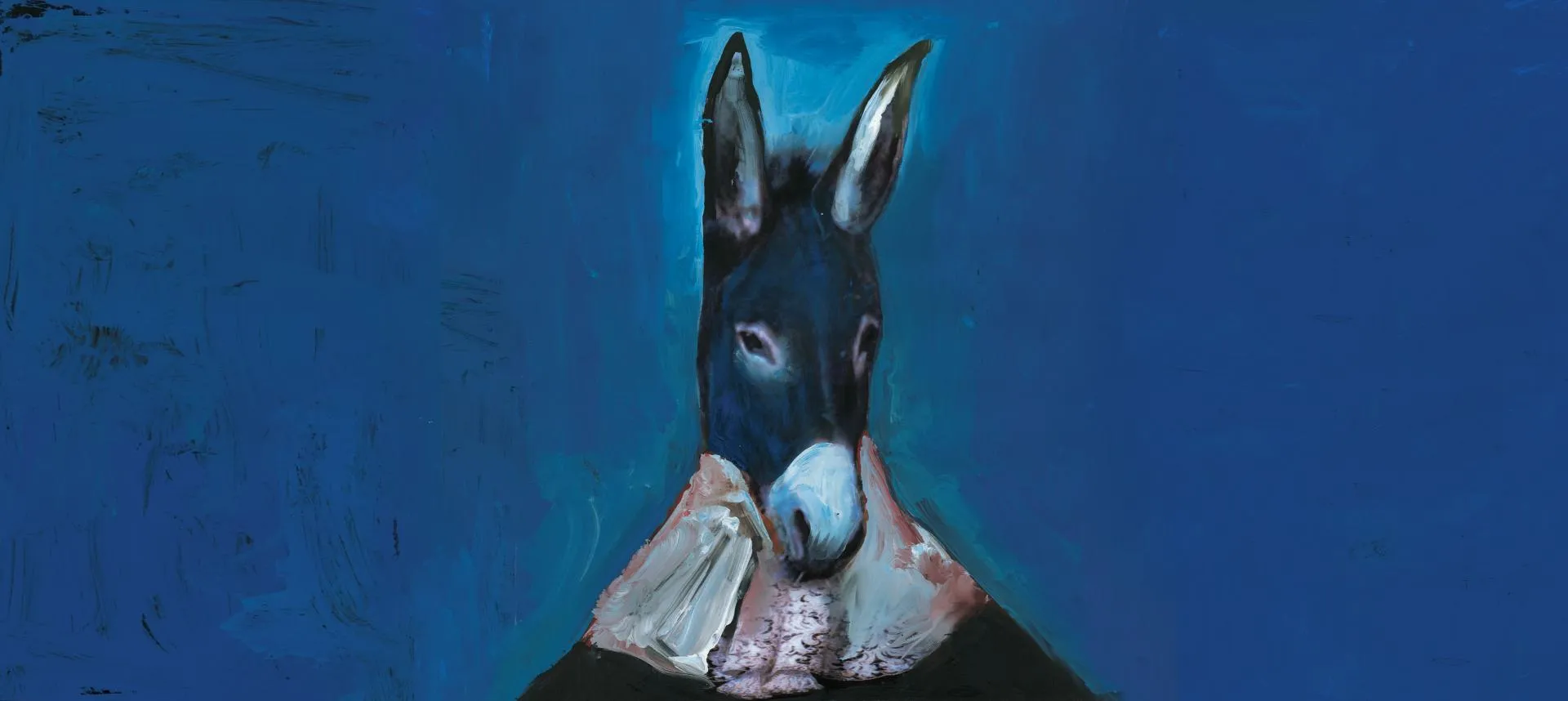
Meanwhile, Quince and his band of five labourers ("rude mechanicals", as Puck describes them) have arranged to perform their play about Pyramus and Thisbe for Theseus's wedding and venture into the forest, near Titania's bower, for their rehearsal. Quince leads the actors in their rehearsal of the play. Bottom is spotted by Puck, who (taking his name to be another word for a jackass) transforms his head into that of a donkey. When Bottom returns for his next lines, the other workmen run screaming in terror: They claim that they are haunted, much to Bottom's confusion. Determined to await his friends, he begins to sing to himself. Titania, having received the love potion, is awakened by Bottom's singing and immediately falls in love with him. (In the words of the play, "Titania waked, and straightway loved an ass.") She lavishes him with her attention and that of her fairies; while she is in this state of devotion, Oberon takes the changeling boy.
Act 3 Scene 2
Oberon sees Demetrius still following Hermia. When Demetrius goes to sleep, Oberon condemns Puck's mistake and sends him to get Helena while he charms Demetrius's eyes. Upon waking, Demetrius sees Helena arguing with Lysander, and instantly falls in love with her. Now under the spell, the two men are both in love with a Helena convinced that both of her two suitors are mocking her, as neither loved her originally. Hermia finds Lysander and asks why he left her, but Lysander claims he never loved Hermia, instead loving Helena. This soon turns into a quarrel between the two ladies, with Helena chiding Hermia for joining in the mockery session, followed by the latter furiously charging at her for stealing her true love's heart and blaming her for the supposed 'mockery'. Oberon and Puck decide that they must resolve this conflict, and by the morning, none of them will have any memory of what happened, as if it were a dream. Oberon arranges everything so Helena, Hermia, Demetrius, and Lysander will all believe they have been dreaming when they awaken. Puck distracts Lysander and Demetrius from fighting over Helena's love by mimicking their voices and leading them apart. Eventually, all four find themselves separately falling asleep in the glade. Once they fall asleep, Puck administers the antidote to Lysander, returning his love to Hermia again. Once they awaken, the lovers assume that whatever happened was a dream and not reality.
Act 4
Act 4 Scene 1
Having achieved his goals, Oberon releases Titania and orders Puck to remove the donkey's head from Bottom. The fairies then disappear, and Theseus and Hippolyta arrive on the scene, during an early morning hunt. They find the lovers still sleeping in the glade. They wake up the lovers and, since Demetrius no longer loves Hermia, Theseus over-rules Egeus's demands and arranges a group wedding. The lovers at first believe they are still in a dream and cannot recall what has happened. The lovers decide that the night's events must have been a dream, as they walk back to Athens. After they exit, Bottom awakes, and he too decides that he must have experienced a dream "past the wit of man" and declares that he will get Peter Quince to write a Ballad of the previous night's dream. Fittingly called "Bottom's Dream", Bottom decides that he will sing the ballad after the end of their play, when Thisbe dies.
Act 4 Scene 2
At Quince's house, Quince and his team of actors worry that Bottom has gone missing. Quince laments that Bottom is the only man who can take on the lead role of Pyramus. Bottom returns and the actors get ready to put on "Pyramus and Thisbe".
Act 5
In the final scene of the play, Theseus, Hippolyta and the lovers watch the six workmen perform Pyramus and Thisbe in Athens. The mechanicals are so terrible at playing their roles that the guests laugh as if it were meant to be a comedy, and everyone retires to bed. Afterwards, Oberon, Titania, Puck, and other fairies enter, and bless the house and its occupants with good fortune. After all the other characters leave, Puck "restores amends" and suggests that what the audience experienced might just be a dream.
 en
en 
 de
de it
it fr
fr es
es ru
ru jp
jp ro
ro







 Teatro del Maggio Florence Opera Italy
 Sun 18 Apr 2027 - Wed 28 Apr 2027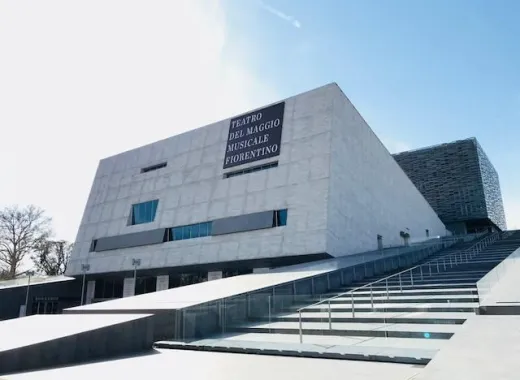



 RM Europa Ticket GmbH
  Call now
 Book now