


The Master-Singers of Nuremberg

Order tickets
May 2027
Mo
Tu
We
Th
Fr
Sa
Su


The Master-Singers of Nuremberg – Richard Wagner | Opera
Opera in three acts
Text: Richard Wagner
Language: German


About the work
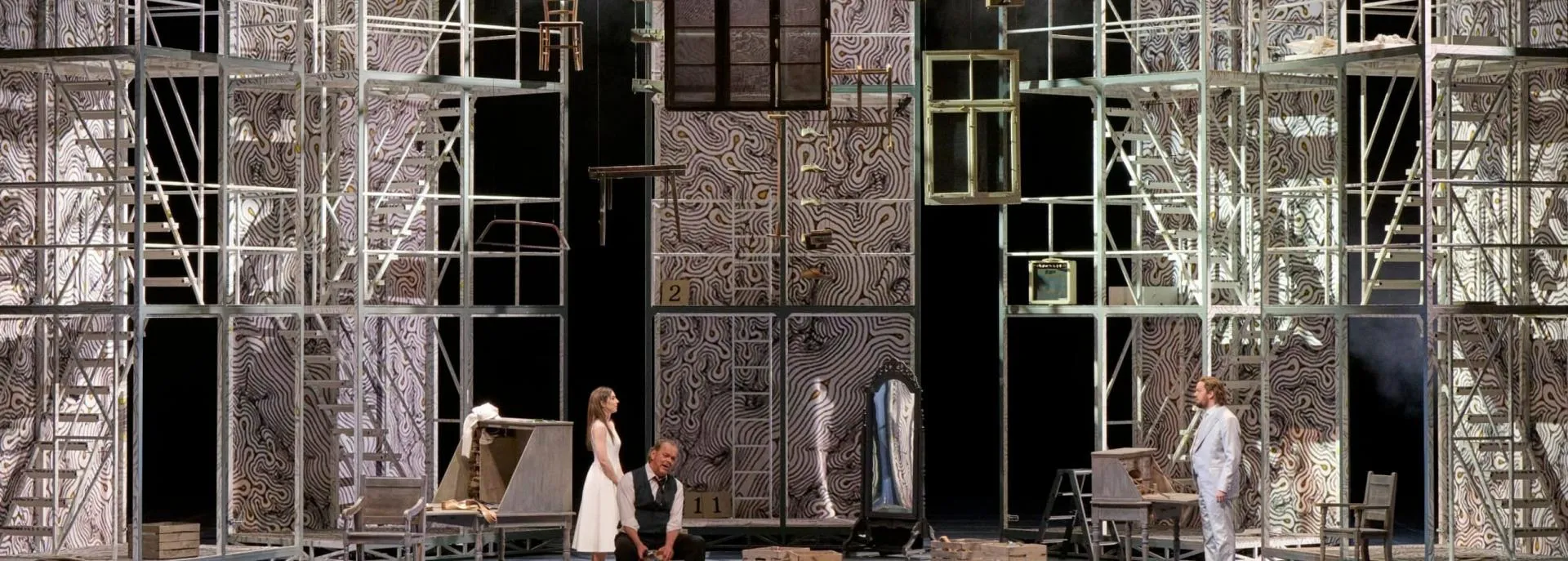
Hans Sachs, the respected shoemaker and Master Singer, recognizes the talent of the young knight Walther von Stolzing, who seeks Eva’s hand in marriage.
To win her, however, Walther must comply with the strict rules of the Master Singers. At the singing contest, he risks failure, but Sachs supports him wisely. With a new and inspired song, Walther ultimately convinces the guild. He wins Eva, while Sachs advocates for moderation, artistry, and a sense of community.


Act I – approx. 85 minutes
Interval – approx. 30 minutes
Act II – approx. 60 minutes
Interval – approx. 30 minutes
Act III – approx. 120 minutes


Storyline


Act 1

Closing hymn of a church service on the eve of the Feast of St. John. The knight Walther von Stolzing, who has come from Franconia, manages to ask Eva, the daughter of his host Veit Pogner, whether she is already a bride.

Walther is informed by Eva's nurse Magdalene: Eva's hand has been promised to the winner of the upcoming Meistersinger competition. Her father, the goldsmith Pogner, has decided this. Eva, of course, is already attracted to the Frankish knight. Walther decides to take part in the competition in order to win her love. During the preparations for a meeting of the masters, David, apprentice to the shoemaker Hans Sachs, describes the difficulties of tablature to the young knight.


Stolzing is confused by the masters' complicated system of rules. Nevertheless, he dares to skip the prescribed steps to master level and become a master on the same day. Pogner now announces to the masters that he has chosen his daughter and his fortune as the prize in the singing competition and recommends that the knight Stolzing be allowed to take part.

Sachs' suggestion that the people should also have a say in the singing contest is rejected, including by the town clerk Beckmesser, who has high hopes for Eva and initially suspects a rival in the popular Hans Sachs. However, his suspicions soon turn to Walther von Stolzing. During the rehearsal song that he is allowed to sing, Beckmesser emphatically assumes the role of »Merker«. Walther has performed his song without worrying about the master's rule. This makes it easy for Beckmesser to eliminate his presumed rival: The Junker has »sung his chance away and is utterly undone«. Only Hans Sachs recognizes the artistic value of Walther's song, which is unusual for the masters.


Act 2

Magdalene learns from David, whom she has taken to her heart, that the knight Walther has failed his audition. Eva hears about this mishap through Magdalene.

Hans Sachs decides to continue working outside his house despite the evening hour. He reflects on the events of the day. Eva comes to him for advice and help. Probably to test her, Sachs now sides with the Meistersinger in Walther's affair. She reacts angrily and Sachs recognizes her true affection. Perhaps he himself would have been welcome as Eva's suitor, perhaps he too had once thought of asking Eva to marry him. But that is now over. Eva learns from Magdalene that Beckmesser wants to give her a serenade, but does not want to appear at the window under any circumstances. Magdalene is to arrange this in Eva's clothes. She herself now has a rendezvous with Walther, who, outraged by the Meistersinger, persuades her lover to flee with him. Sachs has overheard this plan. As he is well-disposed towards the two young people, he plans to prevent the ill-considered escape.


Beckmesser arrives and tries to sing his serenade. However, he is severely disturbed by Sachs. Just as Beckmesser marked Walther von Stolzing's mistakes against the rules with chalk strokes, Sachs, who is outside soling Beckmesser's shoes, now marks the town clerk's mistakes by hitting them with a hammer. David recognizes Magdalene, who is listening to this "serenade" in Eva's clothes. He jealously attacks Beckmesser, mistaking him for a rival. The l.rm attracts the neighbors and a general brawl ensues, in the course of which Sachs sends Eva to her father's house and takes the young knight into his own home.


Act 3

Sachs ponders. He finds "madness" everywhere. David, who has a guilty conscience about the night's brawl, recites his saying on St. John's Day and congratulates the master on his name day.

Walther von Stolzing tells of a wondrous dream and puts it into verse on Sachs' advice. Sachs writes down two verses of the poem and leaves the sheet on the table. Beckmesser, deeply disturbed by the previous night's failure, secretly pockets the sheet, on which he believes he recognizes Sachs' entry for the prize singing competition. So that Beckmesser does not look like a thief, Sachs gives him the paper and swears never to claim authorship of the song. Beckmesser gains new hope of success at the prize singing competition. Eva comes to find out for sure. She receives it through the third verse of Walther's new song. Sachs baptizes Stolzing's prize song with the name "selige Morgentraum-Deutweise" according to the old mastersong custom. He then makes David a journeyman, which also makes Magdalene very happy.


Hans Sachs is reverently received by the crowd. As the Meistersinger's spokesman, Sachs gives the oldest candidate, Beckmesser, priority in the singing contest. However, the town clerk makes a fool of himself with Walther's misunderstood, mutilated song. Furious, he names Hans Sachs as the author. The latter, however, calls out the true poet and singer and gives Walther the opportunity to prove himself worthy of the prize. The people cheer Stolzing. But he initially rejects the prize of the masters. Sachs explains to him the dignity and value, meaning and significance of art.

Program and cast

Hans Sachs, shoemaker: Michael Volle
Veit Pogner, goldsmith: Christof Fischesser
Sixtus Beckmesser, clerk: Michael Nagy
Walther von Stolzing, a young knight from Franconia: Eric Cutler
David, Sachs’s apprentice: Daniel Jenz
Eva, Pogner’s daughter: Hanna-Elisabeth Müller


Musical direction: Axel Kober
Staging: Keith Warner
Set design: Boris Kudlička
Costumes: Kaspar Glarner
Lighting: John Bishop
Video: Akhila Krishnan
Choreography: Karl Alfred Schreiner
Assistant director: Katharina Kastening

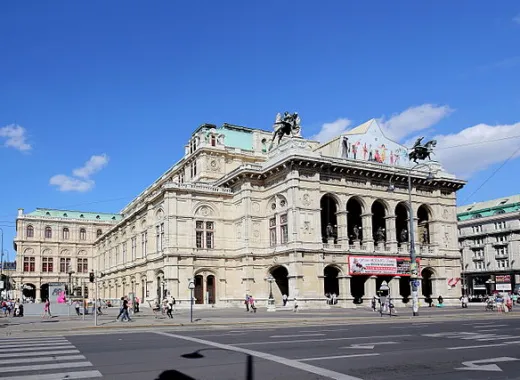
Vienna State Opera

Public Transport
 

Subway lines: U1, U2, U4
Trams: 1, 2, D, J, 62, 65
Buses: 59A
Local Railway: Badner Bahn
Stops: Karlsplatz / Opera

Taxi stands are available nearby.
 

Parking


Parking is only € 6, - for eight hours!

The Wiener Staatsoper and the ÖPARK Kärntner Ring Garage on Mahlerstraße 8, under the “Ringstraßengalerien”, offer the patrons of the Vienna State Opera a new, reduced parking fee. You can park in the Kärntner Ring Garage for up to 8 hours and pay only a flat fee of € 6, -. Just validate your ticket at one of the discount machines inside the Wiener Staatsoper. The normal rate will be charged for parking time greater than 8 hours. The validation machines can be found at the following coat checks: Operngasse, Herbert von Karajan-Platz, and the right and left and balcony galleries.

Important: In order to get the discount, please draw a ticket and do not use your credit card when entering the garage!

After devaluing your ticket in the Wiener Staatsoper you can pay comfortably by credit card or cash at the vending machines.

The machines accept coins and bills up to 50.- Euro. Parking time longer than 8 hours will be charged at the normal rate.
 

History


The structure of the opera house was planned by the Viennese architect August Sicard von Sicardsburg, while the inside was designed by interior decorator Eduard van der Nüll. It was also impacted by other major artists such as Moritz von Schwind, who painted the frescoes in the foyer, and the famous "Zauberflöten" (“Magic Flute”) series of frescoes on the veranda. Neither of the architects survived to see the opening of ‘their’ opera house: the sensitive van der Nüll committed suicide, and his friend Sicardsburg died of a stroke soon afterwards.


On May 25, 1869, the opera house solemnly opened with Mozart's Don Giovanni in the presence of Emperor Franz Joseph and Empress Elisabeth.
The popularity of the building grew under the artistic influence of the first directors: Franz von Dingelstedt, Johann Herbeck, Franz Jauner, and Wilhelm Jahn. The Vienna opera experienced its first high point under the direction of Gustav Mahler. He completely transformed the outdated performance system, increased the precision and timing of the performances, and also utilized the experience of other noteworthy artists, such as Alfred Roller, for the formation of new stage aesthetics.


The years 1938 to 1945 were a dark chapter in the history of the opera house. Under the Nazis, many members of the house were driven out, pursued, and killed, and many works were not allowed to be played.


On March 12, 1945, the opera house was devastated during a bombing, but on May 1, 1945, the “State Opera in the Volksoper” opened with a performance of Mozart's THE MARRIAGE OF FIGARO. On October 6, 1945, the hastily restored “Theaters an der Wien” reopened with Beethoven's FIDELIO. For the next ten years the Vienna State Opera operated in two venues while the true headquarters was being rebuilt at a great expense.


The Secretary of State for Public Works, Julius Raab, announced on May 24, 1945, that reconstruction of the Vienna State Opera would begin immediately. Only the main facade, the grand staircase, and the Schwind Foyer had been spared from the bombs. On November 5, 1955, the Vienna State Opera reopened with a new auditorium and modernized technology. Under the direction of Karl Böhm, Beethoven’s FIDELIO was brilliantly performed, and the opening ceremonies were broadcast by Austrian television. The whole world understood that life was beginning again for this country that had just regained its independence.


Today, the Vienna State Opera is considered one of the most important opera houses in the world; in particular, it is the house with the largest repertoire. It has been under the direction of Dominique Meyer since September 1, 2010.


Opera de Stat Viena
© Bwag/Commons
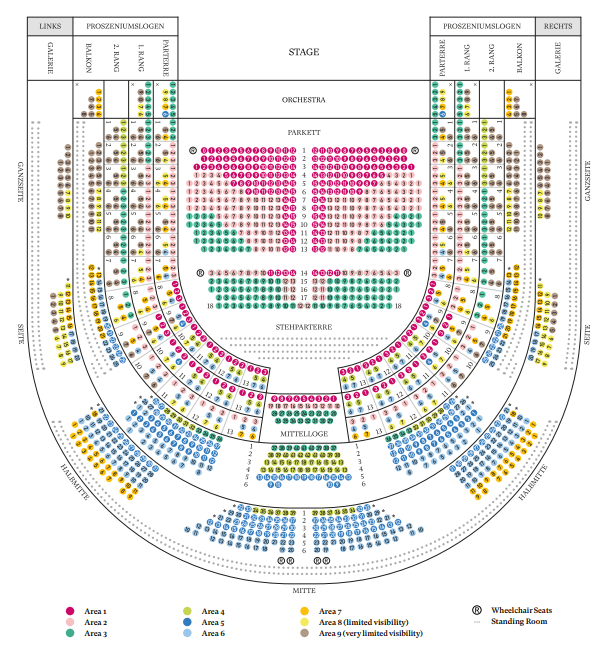
© Wiener Staatsoper
Related events