
 EN
EN DE
DE IT
IT FR
FR ES
ES RU
RU JP
JP RO
RO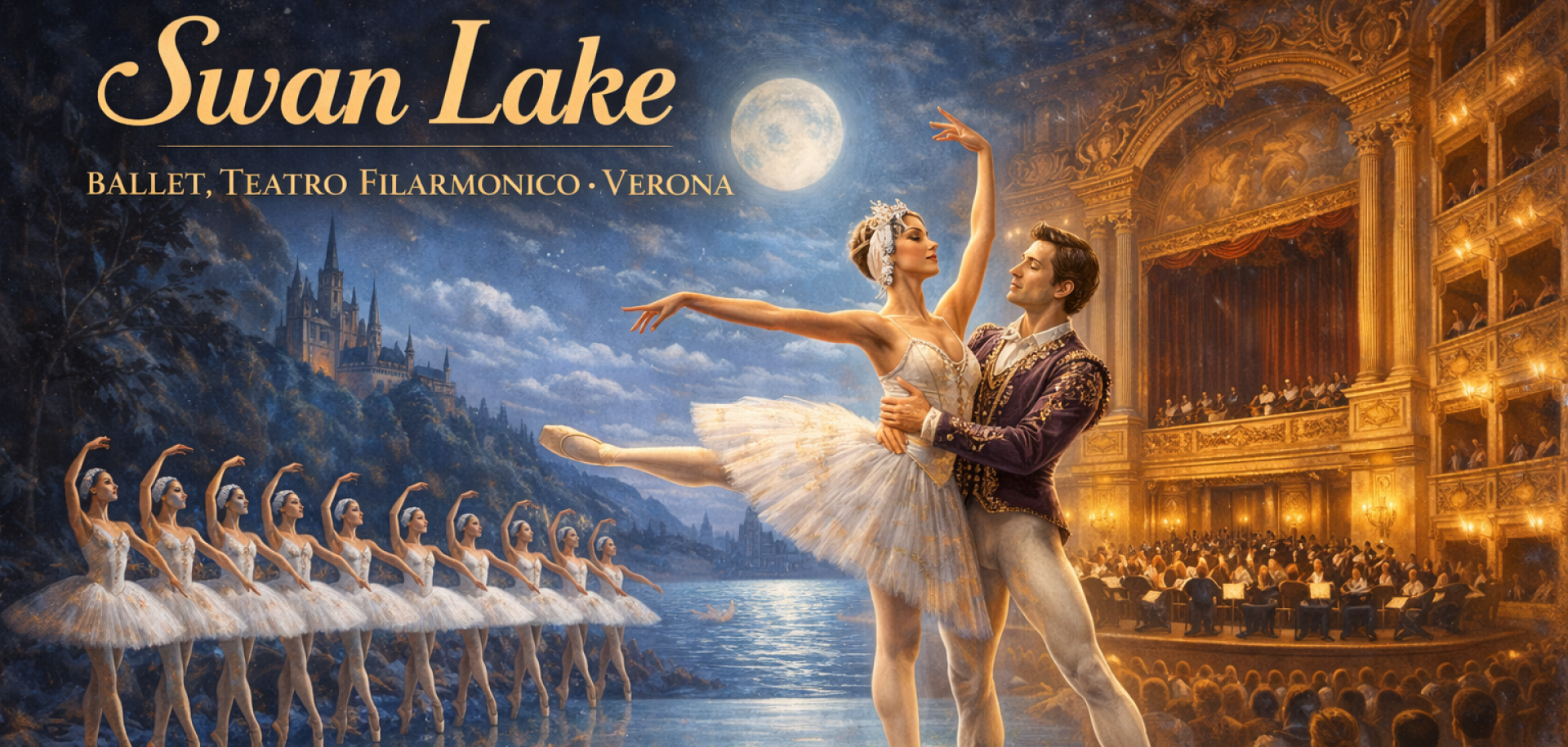
Swan Lake
Order tickets
 October 2027 October 2027 | ||||||
|---|---|---|---|---|---|---|
Mo | Tu | We | Th | Fr | Sa | Su |
Swan Lake is one of the most beloved and iconic ballets in the classical repertoire, composed by Pyotr Ilyich Tchaikovsky. This timeless masterpiece tells the tragic and enchanting story of Princess Odette, who is transformed into a swan by an evil curse, and Prince Siegfried, whose love alone can break the spell. Filled with lyrical beauty, dramatic tension, and unforgettable melodies, Swan Lake captivates audiences with its emotional depth and breathtaking choreography. From the graceful Dance of the Little Swans to the powerful Black Swan pas de deux, each scene offers a visual and musical spectacle. A symbol of classical ballet at its finest, Swan Lake continues to enchant generations, offering a magical journey into a world of romance, mystery, and eternal love.
Synopsis
Act I
Siegfried’s birthday party in the castle garden To celebrate Siegfried’s eighteenth birthday, Alexander and the courtiers and neighbours have organized a surprise party for him in the garden of the castle. The Prince’s tutor Von Rasposen is irritated by Siegfried and Alexander’s friendly relationship with the local peasants. The festivities are interrupted by the arrival of the Queen, the Prince’s mother. She presents her son with a ring reminding him of his future role as successor to the throne: he will soon have to choose a bride. Siegfried is downcast at the prospect of his youth drawing to a close. As darkness falls he and Alexander ponder on the future. They decide to explore the surrounding forest.
Act II
The meeting with Odette Lost in the forest, Siegfried and Alexander arrive at the banks of a great lake. A huge circling bird of prey fills them with fear: it is as if the form of Von Rasposen is still spying on them. The bird of prey – in fact the wicked magician Von Rothbart – summons a swan out of the dark lake, which takes on human form. In Odette, the Swan Queen, and her retinue of swan maidens, Siegfried believes he has found the realization of his ideal of sincerity and simplicity. Surrounded by these pure shapes he is overcome with joy. He swears to remain forever true to his ideals.
Act III
The betrayal During a ball at the castle several brides-in-waiting are presented to Siegfried. But to the amazement of the guests, and to his mother’s alarm, Siegfried refuses to make a choice; all the pomp and splendour contrast starkly with the purity of the vision experienced at the lakeside. Von Rasposen announces the last guests: Von Rothbart, his daughter Odile and their retinue. Siegfried imagines that the Black Swan, Odile, is a manifestation of the White Swan Queen, Odette, but still he wavers. Von Rothbart and Odile blind him with a sensual display of dazzling virtuosity. To Alexander’s dismay Siegfried yields and offers Odile the ring. Too late he realizes that he has betrayed his ideal, Odette. Stricken, he flees back to the lake in despair.
Act IV
The reconciliation with Odette Disillusioned and betrayed, Odette and the swan maidens tarry by the moonlit lakeside, where Siegfried finds them. Odette forgives Siegfried and attempts to comfort him, telling him that he must learn to live with reality. Von Rothbart tries to drive Siegfried away from the lake, but although Siegfried manages to defy him, he drowns in the waters. Von Rasposen abandons his futile search for the Prince, while Alexander discovers the lifeless body of his friend. In Alexander, Siegfried’s ideals will live on.
Program and cast
Teatro Filarmonico
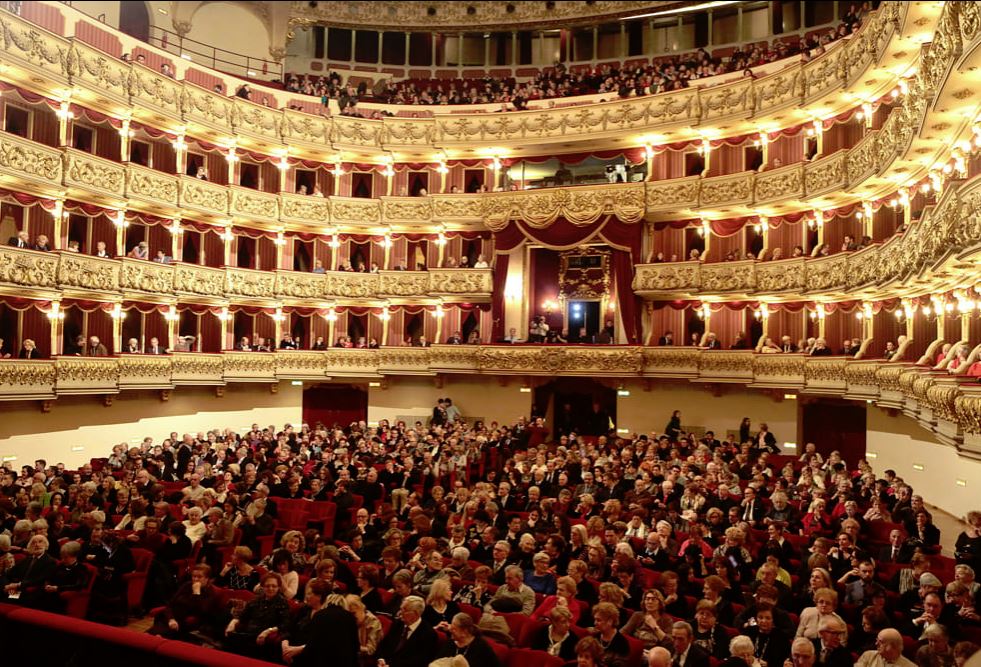
The Teatro Filarmonico or Verona Philharmonic Theatre is the main opera theater inVerona, Italy, and is one of the leading Opera Houses in Europe. Having been built in 1716, and later rebuilt after a fire of January 21, 1749, and again after the allied bombing of February 23, 1945.
Verona needed an opera house, so it was decided in the early 18th century to build a theatre worthy and large. Work began in 1716 and lasted 13 years. Finally, inauguration was on the evening of January 6, 1732, with the pastoral drama La Fida Ninfa by Antonio Vivaldi, a libretto by Scipio Maffei. The opera season became famous, and the performances led society events. But on January 21, 1749, fire eventually spread in the theatre. Rebuilt, the theater was re-dedicated in 1754 with the opera Lucio Vero by Neapolitan composer Davide Perez. The opera had a limited success. Corsican in the 18th century, during the French invasion, a long series of celebrations were held in the theater, such as the Cantata per la Santa Alleanza ("Cantata for the Holy Alliance") of Gioachino Rossini. The theater hosted international singers, and among its repertoire appear the most famous works of Italian and foreign melodrama.
On the tragic night of February 23, 1945, the theater collapsed under the Anglo-American bombing. The Academy Philharmonic announced that it would try to rebuild the theatre exactly as it had been before. The proceedings lasted a long time: the theatre was inaugurated again in 1975, with the opera Falstaff by Antonio Salieri.
The theatre still hosts in the winter season works, ballets and concerts.
Related events