
 EN
EN DE
DE IT
IT FR
FR ES
ES RU
RU JP
JP RO
RO
Pupo 50, History of a Balancer
Order tickets
March 2026 | ||||||
|---|---|---|---|---|---|---|
Mo | Tu | We | Th | Fr | Sa | Su |
On September 11, 2025, Enzo Ghinazzi, for everyone simply Pupo, turned 70. A goal that is intertwined with another equally extraordinary anniversary: the 50 years of his career, during which he wrote some of the most beloved pages of Italian music, becoming a real legend in Italy and in the world, able to speak to entire generations with the same authenticity and passion. From October will start , the world tour that between 2025 and 2026 will embrace Europe, America and Asia. From Vienna to Berlin, from Zurich to London, Paris, Madrid and overseas, passing through the New Year’s Eve show in the prestigious Fuksas Cloud in Rome, to close with a grand finale in the historic Teatro Verdi in Florence, with the concert scheduled for May 27, 2026.
“Seventy years for someone named Pupo I’m a number that makes an impression, but I feel more alive and creative than ever. Celebrating this birthday with my audience, on stage around the world, is the biggest gift I could wish for” – comments Pupo, who is preparing to embark on a journey through music, emotions and memories that have marked millions of lives. The party will begin just tomorrow, September 11, the day of his birthday, in Ponticino, at the former Hotel Country, a symbolic place of its history: bought in the 80’s and lost after a financial crisis also marked by gambling debts, that building has returned to be his, after years of waiting and redemption, and today represents his personal rebirth.
Program and cast
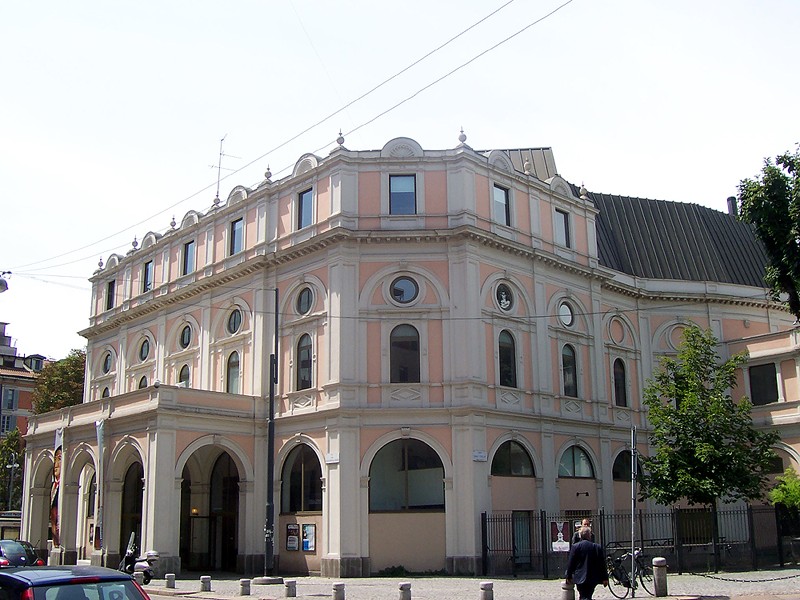
Teatro dal Verme
The Teatro Dal Verme is a theatre in Milan, Italy located on the Via San Giovanni sul Muro, on the site of the former private theatre the Politeama Ciniselli. It was designed by Giuseppe Pestagalli to a commission from Count Francesco Dal Verme, and was used primarily for plays and opera performances throughout the 19th and early 20th centuries. Today, the theatre is no longer used for opera, and is a venue for concerts, plays and dance performances, as well as exhibitions and conferences.
The original 3,000-seat theatre, surmounted by a large cupola, was constructed in the traditional horseshoe shape, with two tiers of boxes and a large gallery (or loggione) which alone contained more than 1000 seats. It opened on September 14, 1872 with a production of Meyerbeer's Les Huguenots and soon established itself as one of Italy's most important opera houses. During its "golden years", the theatre saw the world premieres of Puccini's Le Villi (May 31, 1884); Leoncavallo's Pagliacci (May 21, 1892) and I Medici (November 9, 1893); and Cowen's Signa (November 12, 1893). It also saw the Italian premiere of Lehár's The Merry Widow (April 27, 1907).
By the 1930s, the theatre was mainly being used as a cinema. It was then severely damaged by American aerial bombardment during World War II, after which its magnificent central cupola, which had survived the bombing, was stripped of all its metal parts by the occupying German army. It was partially rebuilt in 1946, and for a period in the 1950s it was used for the performance of musicals. It then reverted to a cinema and a political conference hall.
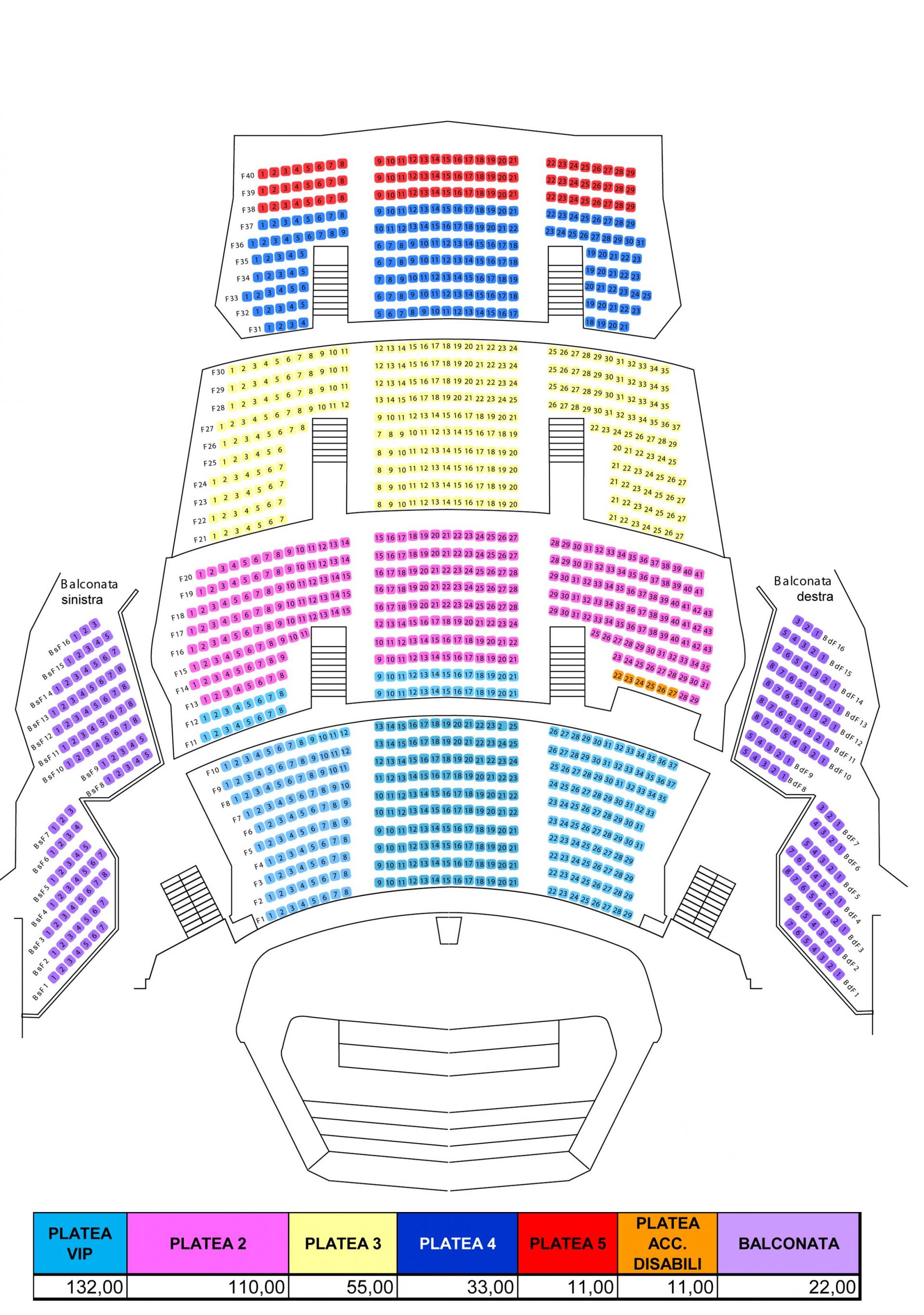
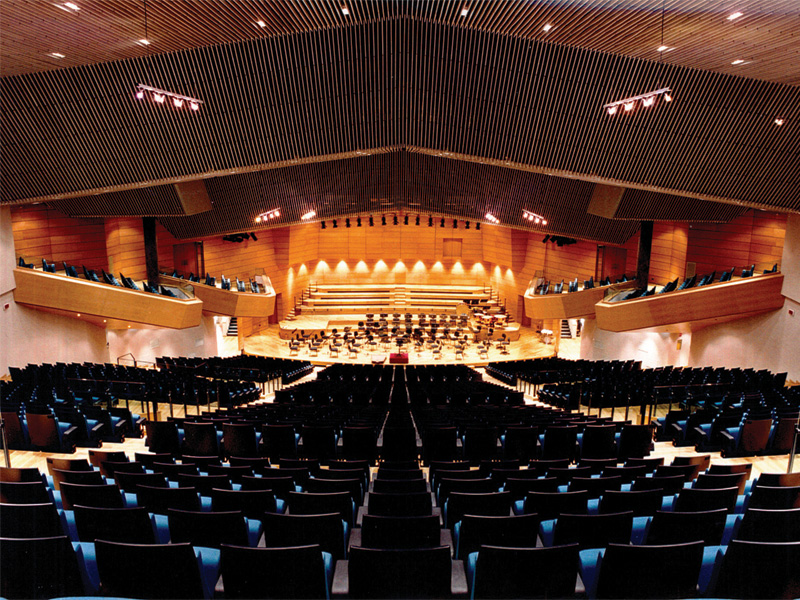
In 1991, the theatre's interior underwent a major restructuring and renovation project which was completed in 1998. It now has a large modern auditorium, the Sala Grande, with 1420 seats, a smaller performing space known as the Sala Piccola, with 200 seats, and a space for exhibitions and conferences, the Sala Terrazzo. Since September 2001, it has been administered
Related events