
 EN
EN DE
DE IT
IT FR
FR ES
ES RU
RU JP
JP RO
RO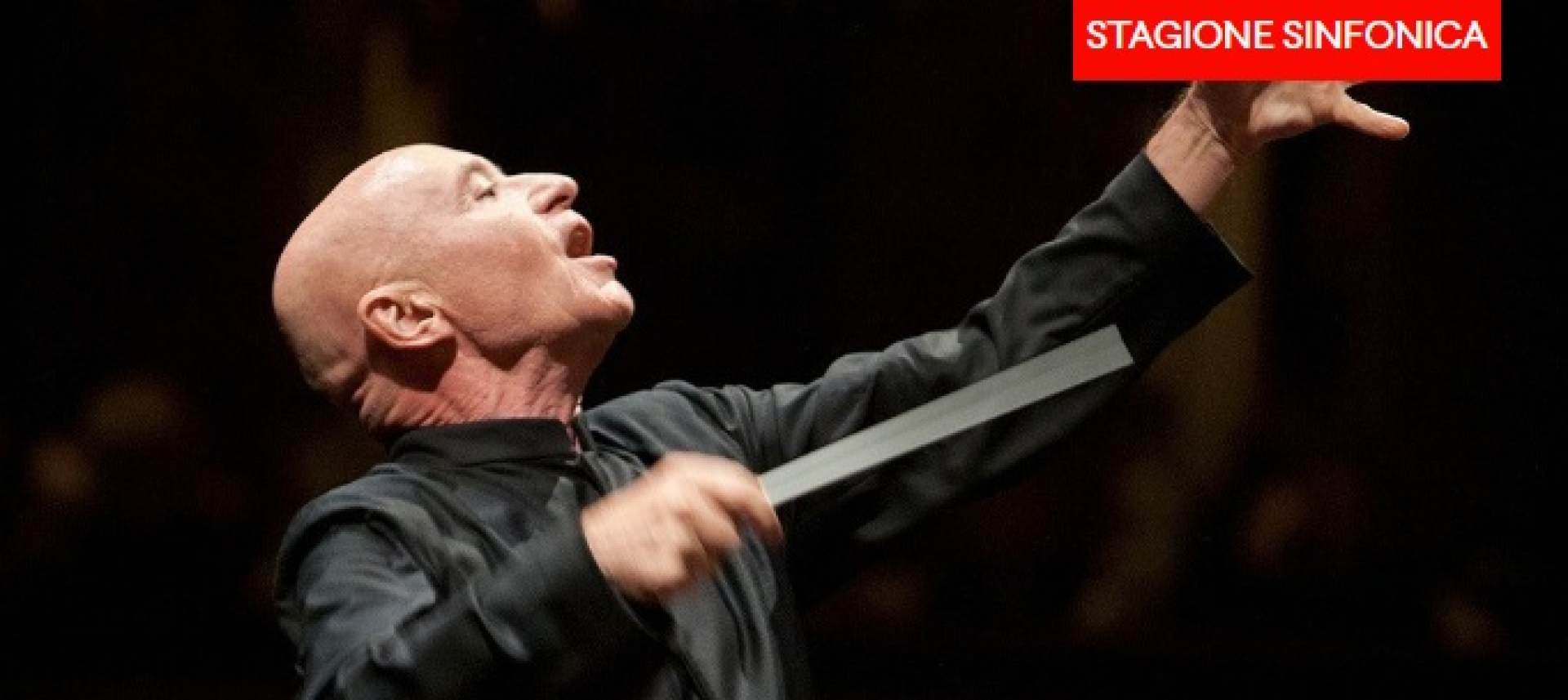
Beethoven and Bruckner
Order tickets
 June 2028 June 2028 | ||||||
|---|---|---|---|---|---|---|
Mo | Tu | We | Th | Fr | Sa | Su |
Milan-Parma, go and return. The bond that unites the Lombard capital to the Emilian city is deep.
Giuseppe Verdi, born in Roncole di Busseto, in the province of Parma, and tied to Milan, the city in which he lives and operates. Arturo Toscanini, born in the Oltretorrente district of Parma and Principal Conductor of the Orchestra of the Teatro alla Scala in Milan from 1921 until 1929. Romano Gandolfi, legendary choir director born in Medesano in the province of Parma and founder of the Milan Symphony Choir.
The list is long, and it won't stop getting thickened. For the moment we celebrate this Milan-Parma axis with an irresistible co-production that brings a conductor from the legendary aura on the stages of the Auditorium in Milan and the Arturo Toscanini Music Production Center at the Parco della Musica in Parma: Christoph Eschenbach, between the Fourth of Bruckner and Beethoven’s Fifth Piano Concerto, alongside a young keyboard talent launched in a brilliant career
Program and cast
Ludwig van Beethoven:
Concerto for piano and orchestra No. 5 in Mi bemolle major op. 73 "Emperor"
Anton Bruckner:
Symphony No. 4 in Mi bemolle major "Romantica"
Milan Symphony Orchestra, Philharmonic Arturo Toscanini
Tom Borrow: Piano
Christoph Eschenbach: Director
Auditorium di Milano Fondazione Cariplo
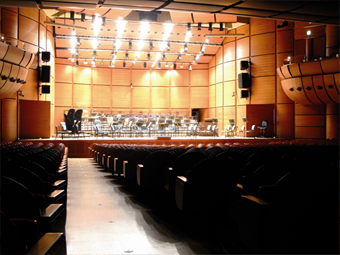 The Auditorium of Milan was opened on 6 October 1999. It houses the Symphony Orchestra and Symphonic Chorus of Milan Giuseppe Verdi. The inauguration Riccardo Chailly led the orchestra performing the Symphony no. 2 of Gustav Mahler .
The Auditorium is owned by the Auditorium di Milano Fondazione Cariplo srl .
The activity of the Symphonic Orchestra and Symphonic Choir of Milan Giuseppe Verdi is promoted and supported by the Foundation Symphony Orchestra and Symphonic Chorus Giuseppe Verdi of Milan , founded in April 2002 and succeeded the Association Orchestra Sinfonica di Milano Giuseppe Verdi , consisting of 12 October 1992.
The auditorium hosts the concert season of the Verdi Orchestra , an amateur orchestra ( laVerdi for all), cultural events , concerts and lectures for schools.
In 1920, depending on the corner of Via Torricelli and street Conchetta the great cineteatro the Montagnetta with 2000 seats in the stalls and gallery.
In 1932, the film becomes Montagnetta cinema Gotthard , by the course of the same name and is run by Jordan Rota.
In 1933, the management company switches to Cinetea - Negri & C. restructuring the hall, the seats are reduced to 1700 .
Around 1937 the hall was renovated designed by the architect . Alessandro Rimini and takes the name of Massimo cinema . The restaurant opens Oct. 20, 1938 .
During the Second World War, cinema Massimo is damaged by bombing the hall closes but reopens in the spring of 1945 already in the autumn of the same year .
From the first half of the seventies, Massimo is also used as a theater and concert venue .
The difficulty of managing a hall so large that it can not have major films cinema Maximum lead to the closure in 1979. Subsequently the room is rented by the group Bargawam that uses it for a few years as a recording studio for television programs.
After a period of neglect is acquired by the entrepreneur who decides to transform Agostino Luini after appropriate renovations by Studio Marzorati , in the Auditorium of Milan , which opened October 6, 1999 the Mayor Albertini, who subsequently renamed the open space in front with the name of Largo Gustav Mahler November 28, 2001 .
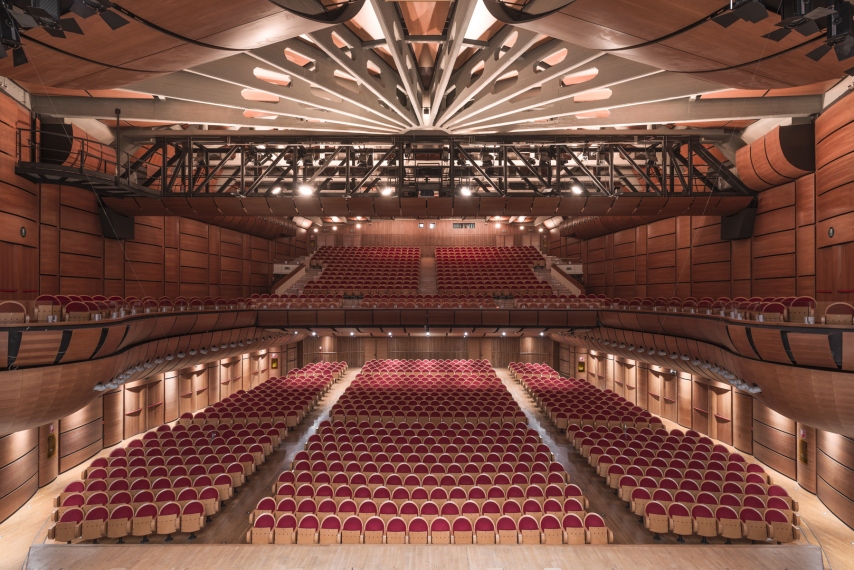
The hall has been designed as a multipurpose for different activities : concerts of symphonic, choral and chamber music , jazz and pop music , sound recordings with digital techniques , diffusion of the shows through satellite TV and films on the big screen.
You can easily reach the Auditorium in Milano by these means:
TRAM
3.it stops before the Auditorium
9, 29 e 30 P. le XXIV Maggio stop
15 Castelbarco/Giambologna stop
BUS
59 / 71 they stop before the Auditorium
TROLLEYBUS
90 e 91 Tibaldi/Meda stop
SUBWAY
Line 1 Duomo stop + tram 3
Line 2 P. ta Genova stop + bus 59
Line 2 Romolo stop + trolleybus 90 and 91
Line 2 Famagosta stop + bus 59
Line 3 Duomo stop + tram 3
TAXI
Via Torricelli parking
PARKINGS
Romolo (close to the subway line 2) open from Monday to Sunday from 7 a.m. to 8 p.m.
Famagosta ( close to the subway line 2) open everyday from 7 a.m. to 1.00 a.m
Related events