
 EN
EN DE
DE IT
IT FR
FR ES
ES RU
RU JP
JP RO
RO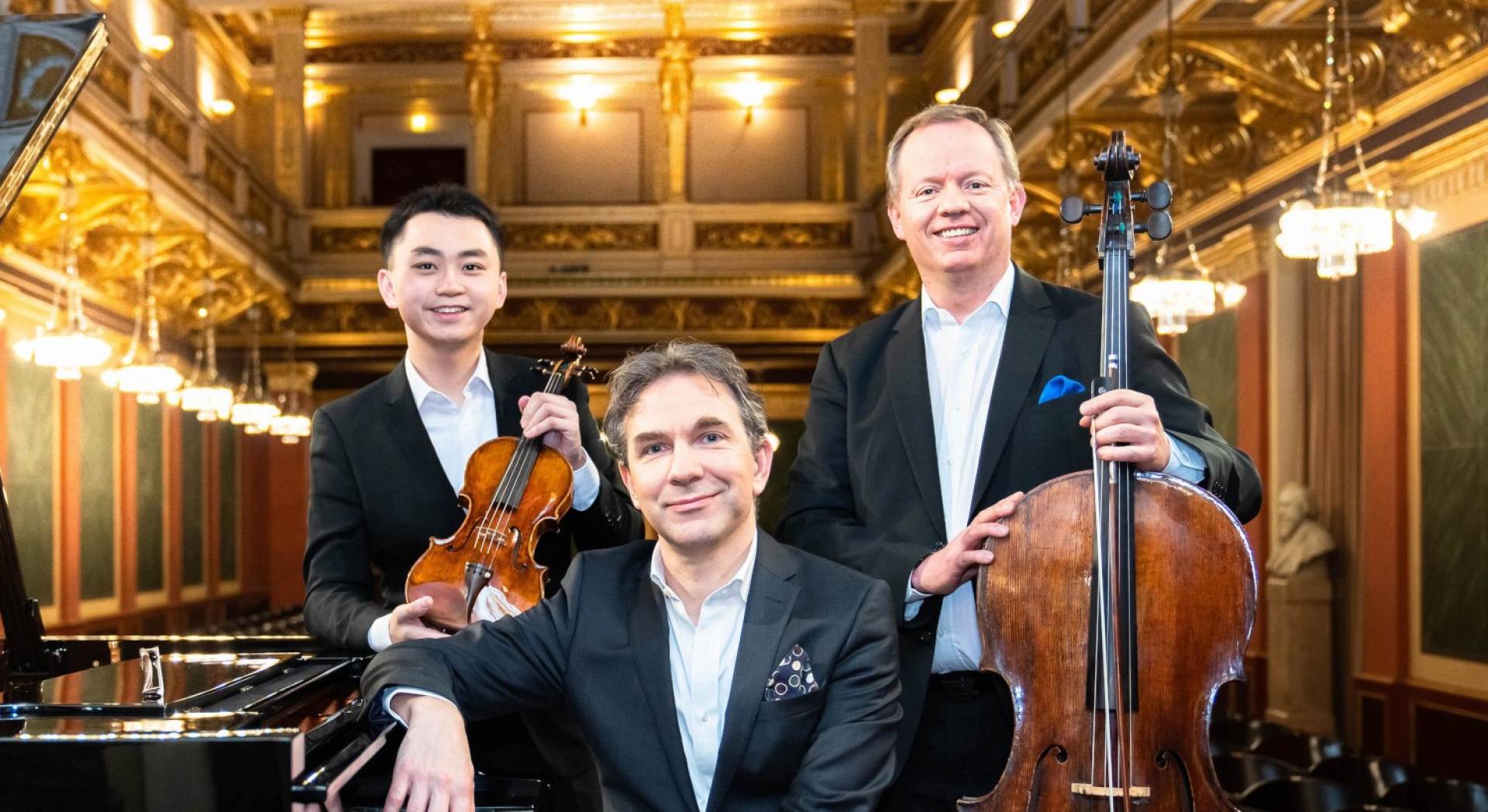
Altenberg Trio
Order tickets
April 2026  | ||||||
|---|---|---|---|---|---|---|
Mo | Tu | We | Th | Fr | Sa | Su |
Program and cast
Tuesday, April 28, 2026
Altenberg Trio
Christopher Hinterhuber, Piano
Ziyu He, Violin
Peter Somodari, Cello
Program
Gerhard Schedl
Der, welcher wandert diese Straße voll Beschwerden. Lamento for Piano Trio (based on Mozart's "The Magic Flute," Act 2, Scene 8)
Antonín Dvořák
Piano Trio No. 1 in B major, Op. 21 (B 51)
Intermission
Arlene Sierra
Butterflies Remember a Mountain
Maurice Ravel
Piano Trio in A minor
Monday, June 15, 2026
Altenberg Trio
Christopher Hinterhuber, Piano
Ziyu He, Violin
Peter Somodari, Cello
Ekaterina Frolova, Violin
Alexander Gordon, Viola
Program
Mel Bonis
Soir, Op. 194
Camille Saint-Saëns
Piano Trio No. 2 in E minor, Op. 92
Intermission
Antonín Dvořák
Piano Quintet No. 2 in A Major, Op. 81 (B 155)
TUESDAY, 15. SEPTEMBER 2026
INTERPRETERS
Altenberg Trio
Christopher Hinterhuber, piano
Ziyu He, Violin
Peter Somodari, cello
PROGRAM
Anton Arenskij
Trio for piano, violin and cello No. 1 in D minor, op. 32
Gajane Tschebotarian
Trio for violin, cello and piano
– Break –
Franz Schubert
Trio for piano, violin and cello in B-maler, D 898
End approx. 9:30 PM
WEDNESDAY, 9. DECEMBER 2026
INTERPRETERS
Altenberg Trio
Christopher Hinterhuber, piano
Ziyu He, Violin
Peter Somodari, cello
PROGRAM
Franz Schubert
Adagio for piano, violin and cello in E in E, D 897, "Notturno"
Emilie Mayer
Large trio for piano, violin and cello in B minor, op. 16
– Break –
Ludwig van Beethoven
Trio for piano, violin and cello in B-b-lig, op. 97, "Archduke Trio"
End approx. 9:30 PM
TUESDAY, 16. FEBRUARY 2027
INTERPRETERS
Altenberg Trio
Christopher Hinterhuber, piano
Ziyu He, Violin
Peter Somodari, cello
PROGRAM
Wolfgang Amadeus Mozart
Trio for piano, violin and cello in G major, KV 564
Arnold Schönberg
Transfigured Night, op. 4; Station for piano trio by Eduard Steuermann
– Break –
Reena Esmail
Saans for piano trio
Johannes Brahms
Trio for piano, violin and cello No. 3 in C minor, op. 101
End approx. 9:30 PM
TUESDAY, 13. APRIL 2027
INTERPRETERS
Altenberg Trio
Christopher Hinterhuber, piano
Ziyu He, Violin
Peter Somodari, cello
PROGRAM
Mary Howe
Elegiaca
Ludwig van Beethoven
Trio for piano, violin and cello in E in E, op. 70/2
– Break –
Sergei Vasilyevich Rachmaninov
Trio élégiaque No. 2 in D minor, op. 9
End approx. 9:30 PM
TUESDAY, 8. JUNE 2027
INTERPRETERS
Altenberg Trio
Christopher Hinterhuber, piano
Ziyu He, Violin
Peter Somodari, cello
Dalibor Karvay, Violin
Thomas Selditz, Viola
PROGRAM
Joseph Haydn
Trio for piano, violin and cello in C male, Hob. XV:27
Cécile Chaminade
Trio for piano, violin and cello No. 2 in A minor, op. 34
– Break –
César Franck
Quintet for piano, two violins, viola and cello in F minor
End approx. 9:30 PM
Musikverein Brahms Hall
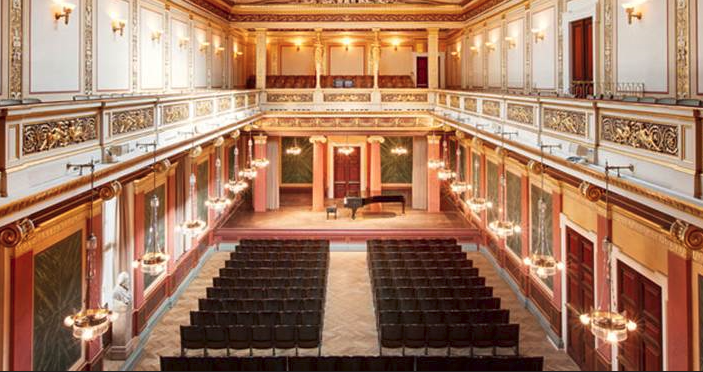
For many years, this hall was known only as the “Kleine Musikvereinssaal”, until in 1937, during the 125th anniversary year of the Gesellschaft der Musikfreunde in Wien, it was given a name that truly reflects its importance: the Brahms Saal. Johannes Brahms not only performed in person in this hall, he was also behind the very first concert to be performed here, by Clara Schumann on 19 January 1870. The standards set that day have been maintained ever since. The Brahms Saal remains one of the most prized locations for the greatest chamber music ensembles and lieder singers performing in the world today.
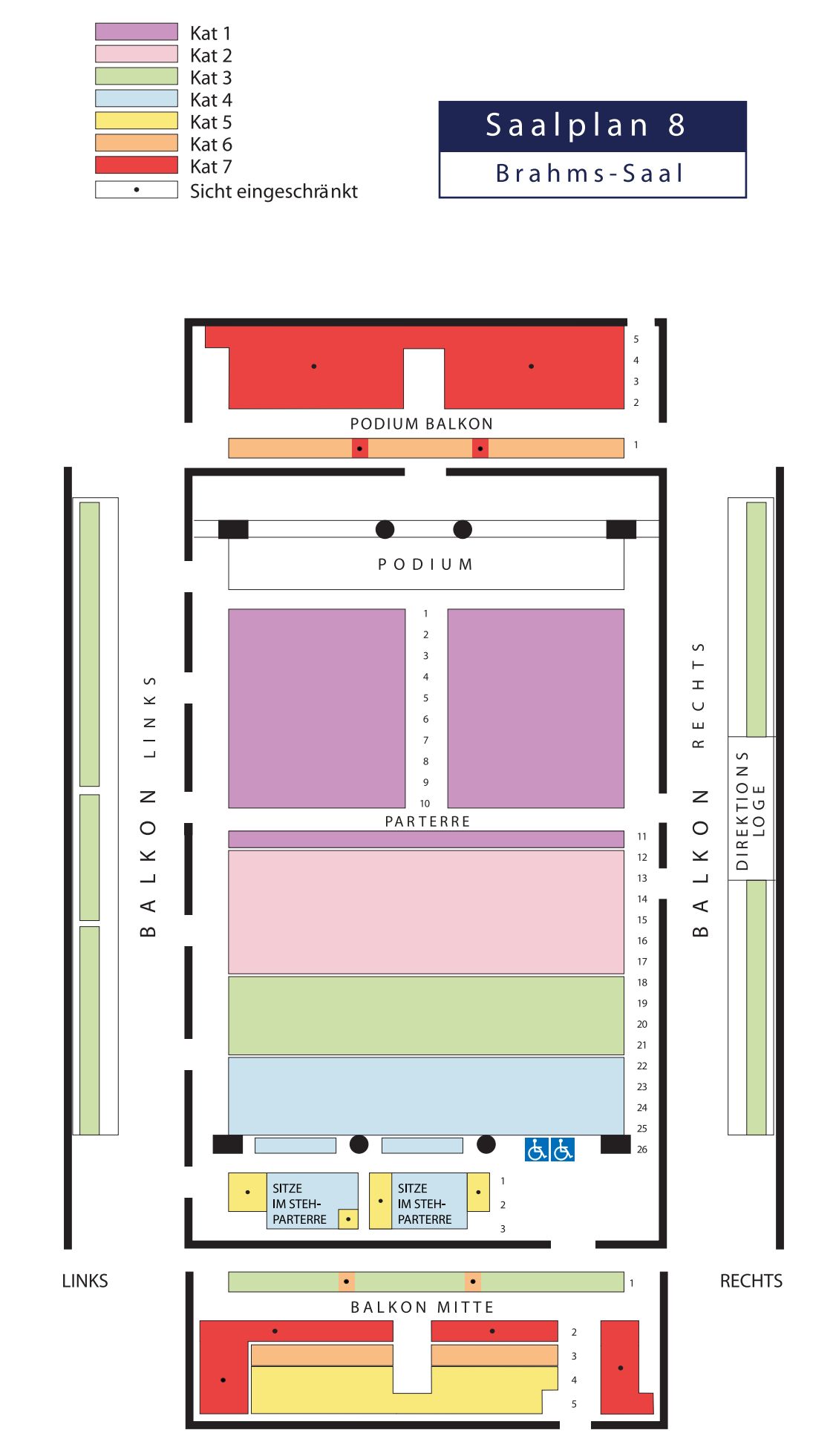
With just under of 600 seats, the hall is designed to showcase the intimate aspects of classical music. The hall acoustics are perfectly attuned to deliver this: the Brahms Saal – 32.50 metres long, 10.30 metres wide und 11 metres high – possesses a similar acoustic brilliance to the Große Musikvereinssaal.
When the Musiverein building was opened in 1870, the Kleine Musikvereinssaal was described as a “true little treasure chest”. It was even suggested that this hall might warrant greater praise and wonderment than the Große Musikvereinssaal: “One might even wish to award the prize to this hall for its peacefulness and simple grandeur.” It is abundantly clear that Theophil Hansen’s design for the Brahms Saal created an architectonic masterpiece of the Historicism period. His commitment to the “Greek Renaissance”, evident in the design’s allusions to classical Hellas, make this concert hall an authentic temple of chamber music.
In 1993 the Brahms Saal underwent a comprehensive restoration programme. The restoration project involved consulting the original designs held at the Print Room at the Academy of Fine Arts in Vienna. This made it possible to reconstruct the original colour scheme created by Hansen as the Musikverein’s architect: green walls, red columns and the liberal use of gold.
When the Brahms Saal reopened to the public in its new form in 1993, a Vienna newspaper wrote: “Without wishing to raise expectations too high, this has been transformed into the most beautiful, magnificent and prestigious chamber music concert hall we are likely to find anywhere in the world.”
Related events