
 EN
EN DE
DE IT
IT FR
FR ES
ES RU
RU JP
JP RO
RO
© Gianluigi Toccafondo - Teatro del Maggio Musicale Fiorentino
A Masked Ball
Order tickets
May 2026 | ||||||
|---|---|---|---|---|---|---|
Mo | Tu | We | Th | Fr | Sa | Su |
A Masked Ball – Giuseppe Verdi | Opera
Part One: 1 hour 30 minutes | Intermission: 30 minutes | Part Two: 50 minutes
Total duration: approximately 2 hours 50 minutes
In 1857, Verdi was commissioned to write an opera for the Teatro San Carlo in Naples and immediately began searching for the perfect subject. His first idea was Shakespeare’s King Lear, but a lack of time forced him to turn instead to a libretto by Scribe, Gustave III ou Le bal masqué, previously set to music by Auber and Mercadante. The story was inspired by a historical event that took place in 1792: the assassination of King Gustav III of Sweden by one of his courtiers during a ball. The topic was undoubtedly sensitive; the onstage killing of a monarch could not fail to alarm the Neapolitan censors, who indeed intervened, imposing numerous cuts and changes. Yet Verdi cared too much for the 18th-century character and the French-inspired brilliance of his new opera to accept, among the many demands, moving the action to the 12th century, where, as he said, it would be impossible “to find a petty prince, a duke, a devil, even from the North, who had seen a bit of the world and caught the scent of Louis XIV’s court.” Thus, the Neapolitan premiere fell through, and A Masked Ball was instead staged at the Teatro Apollo in Rome, where it premiered on February 17, 1859.
Synopsis
Place: Stockholm, Sweden, or Boston, Massachusetts
Time: March 1792 in Sweden, or the end of the 17th century in Boston
Act 1
Scene 1: A public audience at Riccardo's palace, attended by his supporters, but also by his enemies who hope for his demise.
Riccardo (Gustavo) reviews the list of guests who will attend an upcoming masked ball. He is elated to see the name of the woman he loves on the list – Amelia, the wife of his friend and advisor, Renato (Count Anckarström). (Aria: La rivedrò nell'estasi / "There I will be in ecstasy to see her again"). When Renato arrives, he tries to warn Riccardo about the growing conspiracy against him (aria: Alla vita che t'arride / "Your life, so full of joy and hope"), but Riccardo refuses to listen to his words.
Next, Riccardo is presented with a complaint against a fortune-teller named Ulrica (Madame Arvidson), accused of witchcraft. A magistrate calls for her banishment, but Oscar the page defends her (Aria: Volta la terrea / "Turning her eyes from the earth"). Riccardo resolves to investigate for himself and tells the members of the court to disguise themselves and to meet him at Ulrica's lodging later that day.
Scene 2: At Ulrica's dwelling
Ulrica summons her magical powers: Re dell'abisso, affrettati / "King of the abyss, make haste". Disguised as a fisherman, Riccardo arrives before the others. He makes the fortune of a sailor named Silvano come true by spiriting a document of promotion into his pouch, convincing the crowd of the truth of Ulrica's powers. When he realizes that Amelia is coming to see Ulrica, he hides and watches. Alone with Ulrica, Amelia confesses that she is tormented by her love for Riccardo, and asks for a means to bring peace to her heart. Ulrica tells her to gather a certain herb with magical powers; Riccardo resolves to be there when she does so. Amelia leaves.
Now Riccardo presents himself again, along with all of the courtiers, and asks to have his fortune told. (Aria: Di' tu se fedele / "Tell me if the sea awaits me faithfully"). Ulrica reveals that he will be killed by the next man who shakes his hand. He laughingly dismisses her prophecy and offers his hand to the courtiers, who refuse to take it. Renato arrives and shakes Riccardo's hand in greeting. Riccardo's true identity is now revealed and he is acclaimed by the people.
Act 2
On the outskirts of the town, at the gallows-place. Midnight
Amelia, conquering her fears, has come here alone to pick the herb of which Ulrica told her (Aria: Ma dall'arido stelo divulsa / "But when I have plucked the herb"). She is surprised by Riccardo, who has come to meet her, and the two finally declare their love for each other.
Unexpectedly, Renato arrives, and Amelia covers her face with her veil before he can recognize her. Renato explains to Riccardo that the conspirators are pursuing him, and his life is in danger. Riccardo leaves, making Renato promise to escort the veiled woman safely back to town, not asking her identity. When the conspirators arrive, they confront Renato; in the struggle, Amelia's veil drops. Renato assumes that Amelia and Riccardo have been involved in an adulterous love affair. He asks the two leaders of the conspiracy, Samuel and Tom, to meet him the next day.
Act 3
Scene 1: Renato's house
Renato has resolved to kill Amelia for the dishonor she has brought on him. She protests her innocence and begs to see her son one last time. (Aria: Morrò, ma prima in grazia / "I will die, but first, a kindness"). Renato relents, and declares that it is Riccardo, not Amelia, who deserves to die (Aria: Eri tu che macchiavi quell'anima / "You were the one who stained her soul").
Samuel (Count Ribbing) and Tom (Count Horn) arrive, and Renato asks to join their plot, pledging the life of his son as proof of his sincerity. They agree to draw lots to decide who will kill Riccardo. Amelia is forced to draw the winning name – Renato.
Oscar, the page, arrives with invitations to the masked ball; Samuel, Tom and Renato agree that this is where the assassination will take place.
Scene 2: The ball
Riccardo, torn between love and duty, has resolved to renounce his love for Amelia and send her and Renato back to England (Aria: Ma se m'è forza perderti / "But if I am forced to lose her").
At the ball, Renato tries to learn from Oscar what costume Riccardo is wearing. Oscar at first refuses to tell (Aria: Saper vorreste / "You want to know"), but finally answers: a black cloak and a red ribbon. Riccardo manages to identify Amelia and tells her of the decision he has made. As they say goodbye, Renato stabs Riccardo. The wounded Riccardo discloses that though he loved Amelia, she never broke her marriage vows. He pardons all the conspirators, bidding farewell to his friends and his country as he dies.
Program and cast
Conductor: Emmanuel Tjeknavorian
Chorus Master: Lorenzo Fratini
Stage Director: Valentina Carrasco
Set Design: Andrea Belli
Costume Design: Silvia Aymonino
Lighting Design: Marco Filibeck
Video Design: Max Volpini
Orchestra and Chorus of the Maggio Musicale Fiorentino
Riccardo – Antonio Poli / Max Jota (22)
Renato – Ariun Gambaatar / Hae Kang (22)
Amelia – Chiara Isotton / Alessia Panza (22)
Ulrica – Ksenia Dudnikova
Oscar – Lavinia Bini
Samuel – Mattia Denti
Tom – Adriano Gramigni
A Judge – Mario Greco
New production
Cast updated as of June 30, 2025
Teatro del Maggio Florence Opera Italy
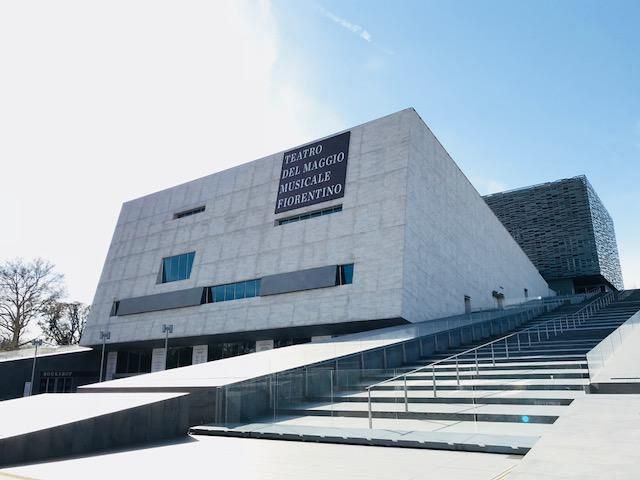
Teatro del Maggio is in the centre, close to the old city walls, next to the historic Stazione Leopolda. The garden that welcomes visitors is Piazzale Vittorio Gui, named after the founder of the Stabile Orchestrale Fiorentina and the Maggio Musicale Fiorentino.
By train
Santa Maria Novella is Florence's main train station.
From there you can reach the theatre with a short walk (about 10-15 minutes) or by taking the tram (a stop) or a taxi.
By car
The Opera di Firenze is just outside the ZTL area.
It is possible to park near the Parco delle Cascine or for a fee in the Porta al Prato car park (Via Elio Gabbuggiani, 7) and in the Piazza Vittorio Veneto car park.
By bus
Lines C1, C2 and D (Leopolda stop);
Lines 17 and 23A-B (stop Via delle Carra);
Lines 17B-C, 22, 23N, 23 and 57 (Pierluigi da Palestrina stop);
Lines 29, 29B, 29BA, 29BC, 29D, 30A, 30B, 30AC, 35 and 35° (stop Leopolda - Porta al Prato; Capolinea).
By tram
Line T1 (stop Porta al Prato - Parco della musica).
Related events